
Mrs Brown’s Cheese board
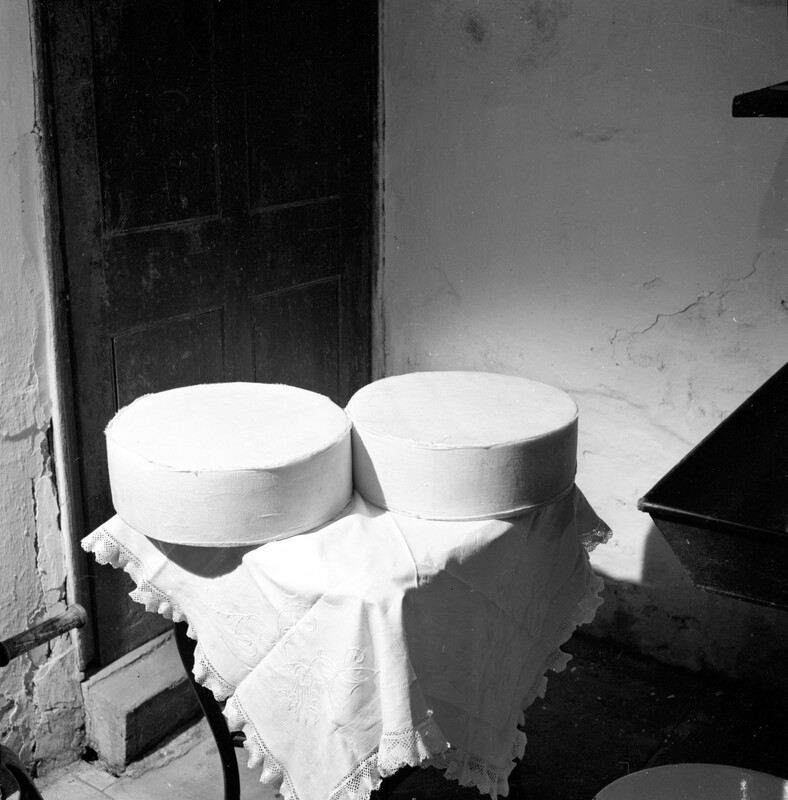
This exhibition explores the MERL Library and Archives collections through a selection of items that were displayed on “Cheese Night”, an event that was held at the Museum of English Rural Life on 30 November, 2023. It represents an opportunity to showcase various MERL Library collections and deposits held in the MERL Archive and was curated by a member of the library staff, clearly not an expert in the history of cheesemaking.
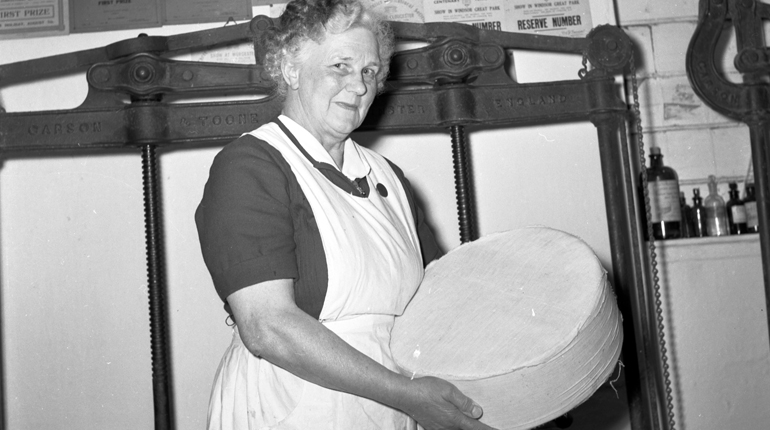
Mrs Brown’s Double Gloucester
This photo was taken by photographer John Tarlton (1914-1980) at Actrees Farm, near Berkeley, Gloucestershire, in the 1950s -60s. The subject is Mrs Albert Brown captured while proudly showing the perfect round of her Double Gloucester.
Regional variety has traditionally being associated with cheese production, like with most other artisan foods and drinks, a reminder of the correlation between regionality and local farming practices. The picture also highlights the significant role that women have played historically in the process of cheesemaking.
John Tarlton – Black and white negatives of Double Gloucester cheesemaking with Mrs Albert Brown of Actrees Farm, near Berkeley, Gloucestershire.
P TAR PH1/3/3/1/4
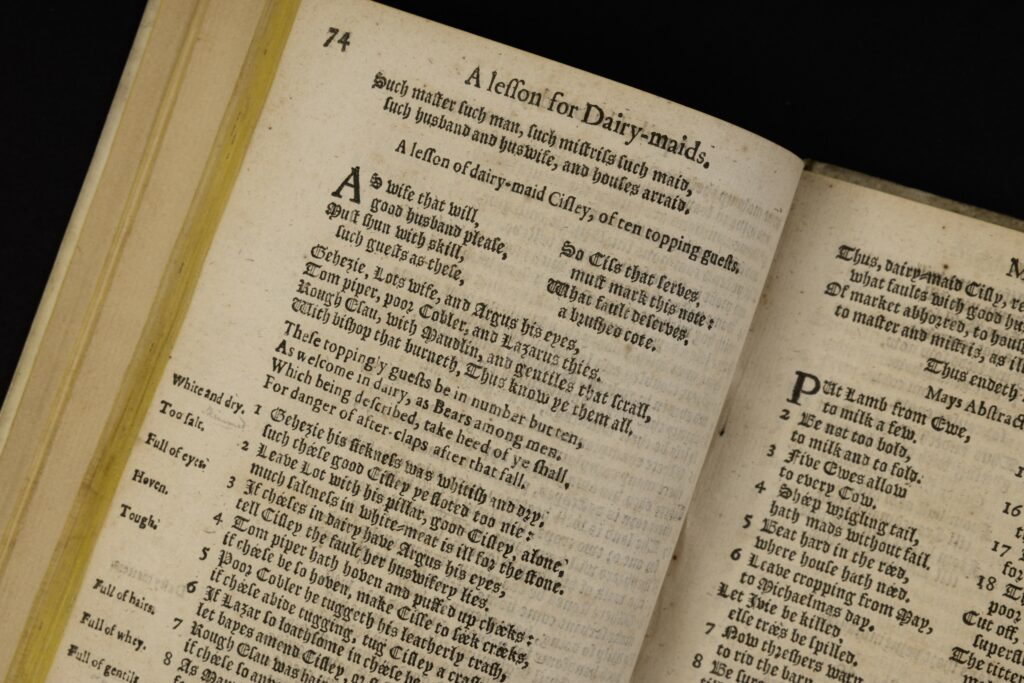
A Lesson for Dairy-maids
In one of the earliest examples of farming handbooks in the English language, the poet Thomas Tusser (1524-1580) lists the characteristics of the perfect cheese in his “lesson for Dairy-maids” using similes in verse:
Not like Gehazi, who is dead white, like a leper
Not like Lot’s wife, all salt
Not like Argus, full of eyes
Not like Tom Piper, “hoven and puffed”
…
Not like the Gentiles, full of maggots
Not like a Bishop, made of burnt milk.
Thomas Tusser – ‘Fiue hundreth pointes of good husbandrie‘ (1585)
RESERVE–630.942-TUS
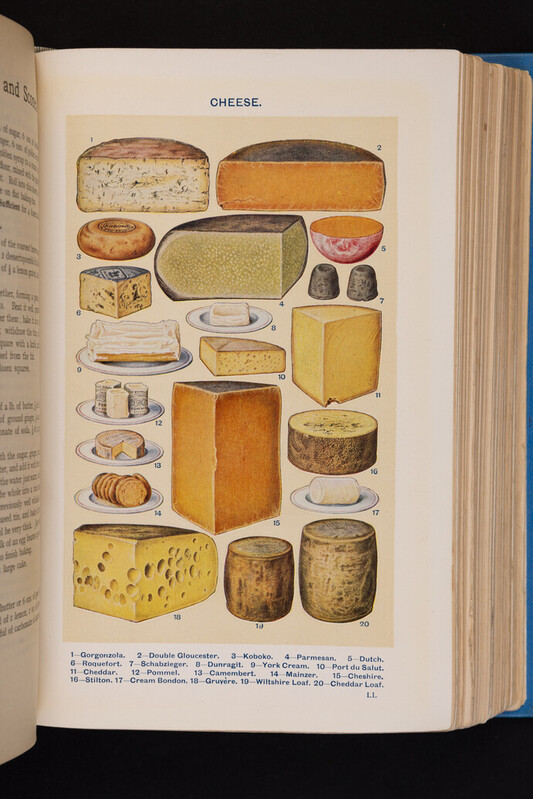
Mrs Beeton’s cookery book
Mrs Beeton’s Book of household management was one of the first recipe books to be illustrated with colour plates, when it first appeared in 1861.
Isabella Beeton died in 1865, but her book continued to be updated and enlarged, and remained in publication until 2016, a record in the history of publishing.
This edition, from 1923, includes 1700 pages and 32 colour plates, plus additional pages at the end with general advertisements for household products.
Mrs Beeton’s household management : a complete cookery book. New edition, 1923.
RESERVE–641.5-BEE
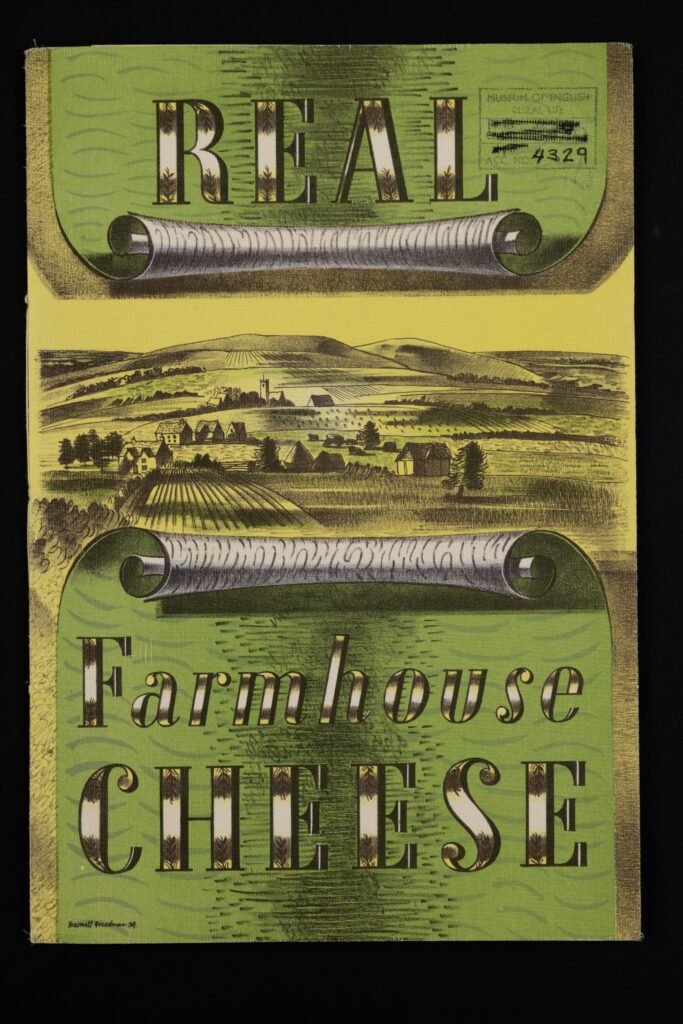
Barnett Freedman’s Real farmhouse cheese
A rare copy of a 1939 illustrated pamphlet that sings the praises of the most popular English cheeses: Cheshire, Cheddar, Lancashire, Wensleydale, Caerphilly, Stilton, the Gloucesters, and Leicester.
Presumably issued by the artist himself and printed at the Baynard Press, it contains colour lithographs in the iconic style of Barnett Freedman and features an idyllic scene of the English countryside on the cover.
This copy is a gift of the Ministry of Food, which in 1955 merged with the Ministry of Agriculture and Farming to form MAFF and whose library collections are now part of the MERL Library.
Barnett Freedman – Real farmhouse cheese [1939]
MERL LIBRARY RESERVE FOLIO–4390-FRE
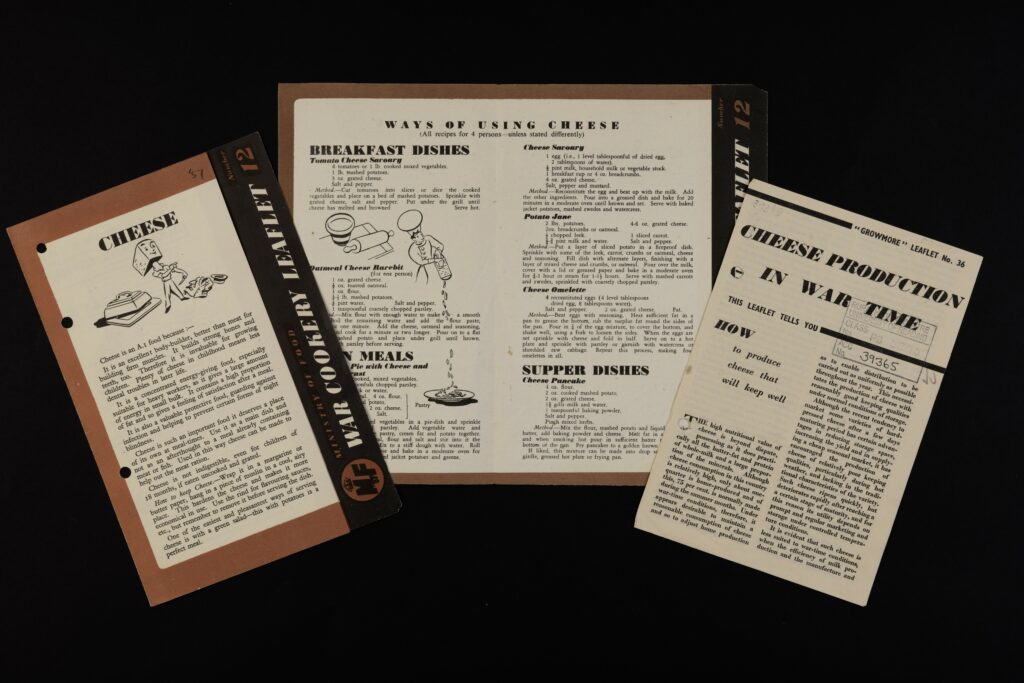
MAFF War time leaflets
Our MAFF Library (Ministry of Agriculture, Fisheries and Food, established 1955) holdings span a wide period including the war years.
MAFF’s predecessors, the Ministry of Agriculture and Fisheries and the newly created Ministry of Food (1939-1954), issued a variety of leaflets and advisory literature to encourage the population to follow a nutritious diet despite food shortages, grow vegetables and maximise the use of ingredients supplied as rations. The leaflets include recipes that use cheese for different meals throughout the day and describe cheese production in war time.
WW2 had a deleterious effect on small cheese producers, as the cheesemaking process underwent a significant amount of streamlining, which prioritised hard cheeses made in factories, effectively driving out of business the small artisan producers.
Ministry of Agriculture and Fisheries – Cheese production in war time. [1941]
Ministry of Food – War Cookery leaflets. [1941]
MERL LIBRARY PAMPHLET–4390-BOX 1/23
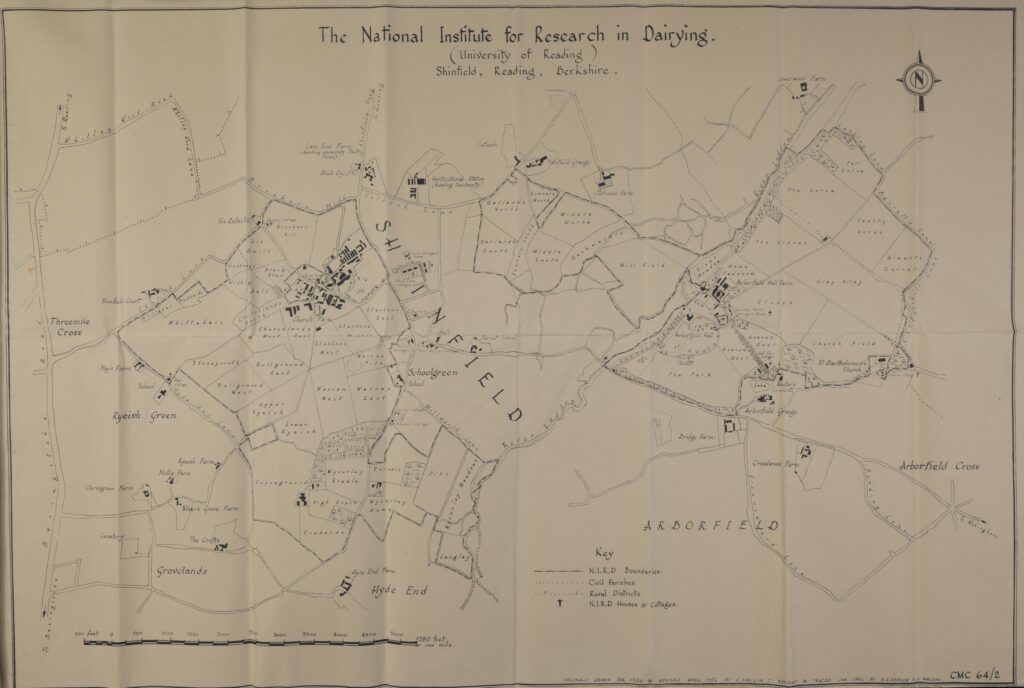
The NIRD in Shinfield
The National Institute for Research in Dairying (NIRD) was first established at University College, Reading in 1912 as The Research Institute in Dairying.
The MERL holds the archives of the NIRD , which was concerned with research into the production and uses of milk and improving methods in the dairy industry.
This is the map of the site, which was located in Shinfield, near Reading, and continued to operate until 1985. The site has since been redeveloped and is the home of Thames Valley Science Park and the glamorous Shinfield Studios.
Plan of NIRD premises (1956)
D 2NIRD AD4/7
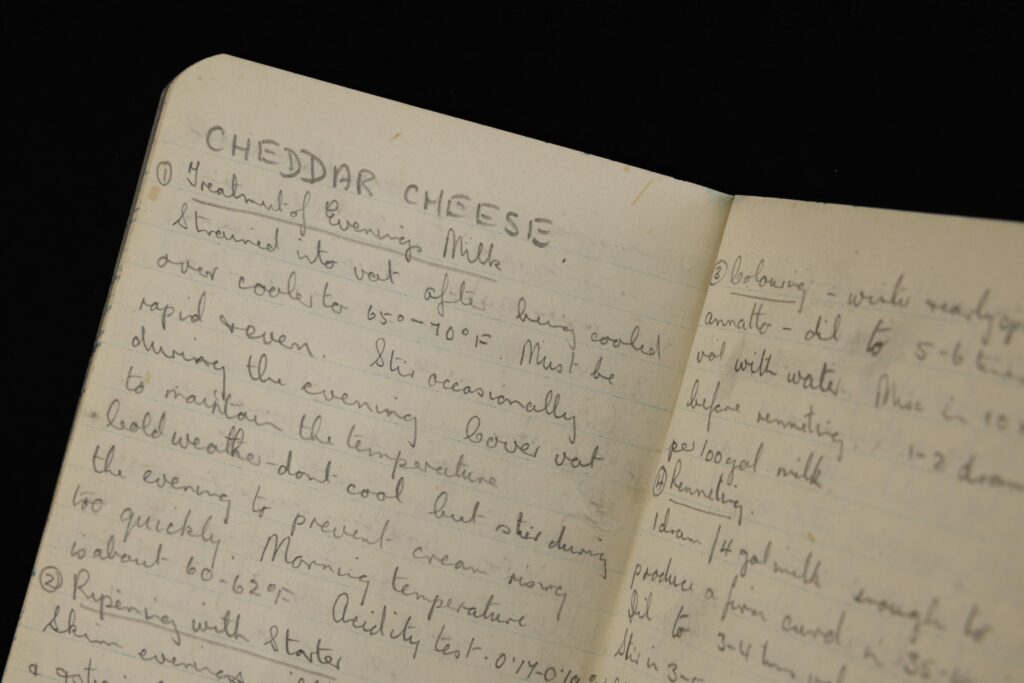
A cheesemaking student’s notebook
Since its foundation in 1892 as a University of Oxford extension college, the University of Reading has been renowned for its teaching and expertise in agriculture, food technology and animal science.
The School of Agriculture used to offer courses in dairying and cheesemaking among others, as proven by these notes taken by Geoffrey R. Wilson. Wilson was a student in the 1940s and the lesson in question concerned hard pressed cheeses and the treatment of evening milk for use in the production of Cheddar cheese.
Notebook of Geoffrey R. Wilson [1940s]
D DX1923
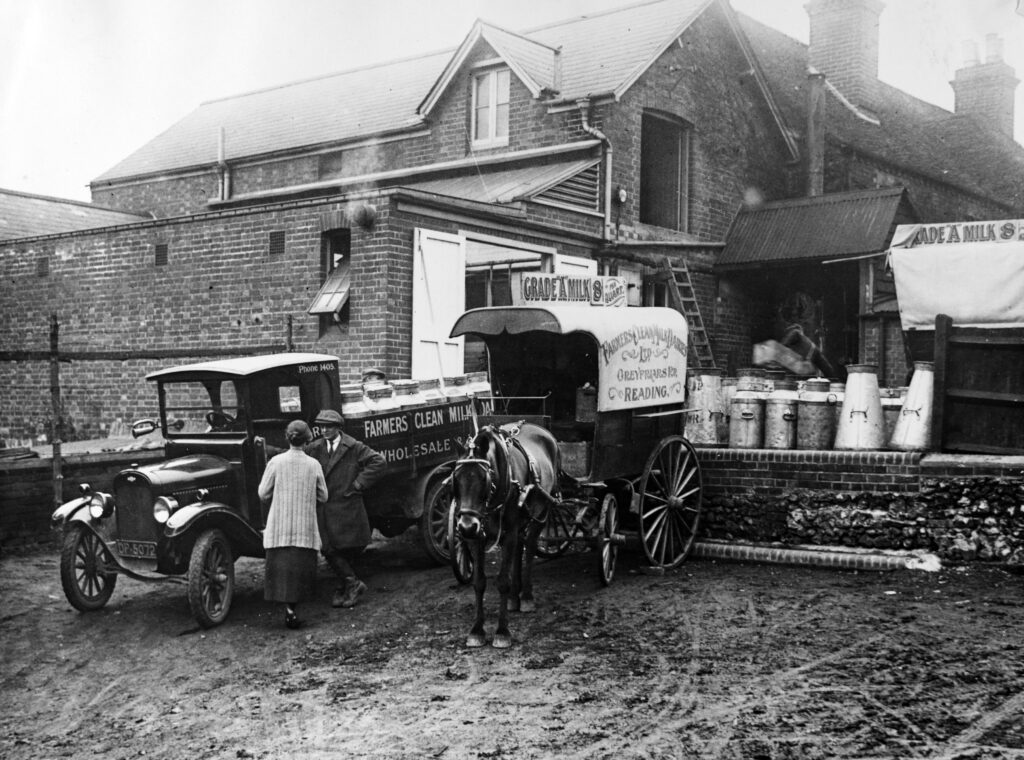
Working at the NIRD
This photograph provides and insight into the daily life of employees at the National Institute for Research in Dairying (NIRD) in the interwar period. Professor R. Stenhouse Williams, who is captured here holding a relaxed conversation, was the Director between 1912 and 1932.
The Institute’s records for 1943 show that 118 people were on pay roll, including 73 men/boys and 45 women/girls. The significant female workforce included 6 girls under the age of 18 and 7 women of child bearing age (21-50) employed part-time (under 30 hours per week).
The Institute must have supplied a variety of businesses and customers across the Reading area and milk was distributed by engine powered vehicles as well as animal drawn carts.
Photograph of Professor R Stenhouse Williams, Director [ca. 1925]
D NIRD PH3/2
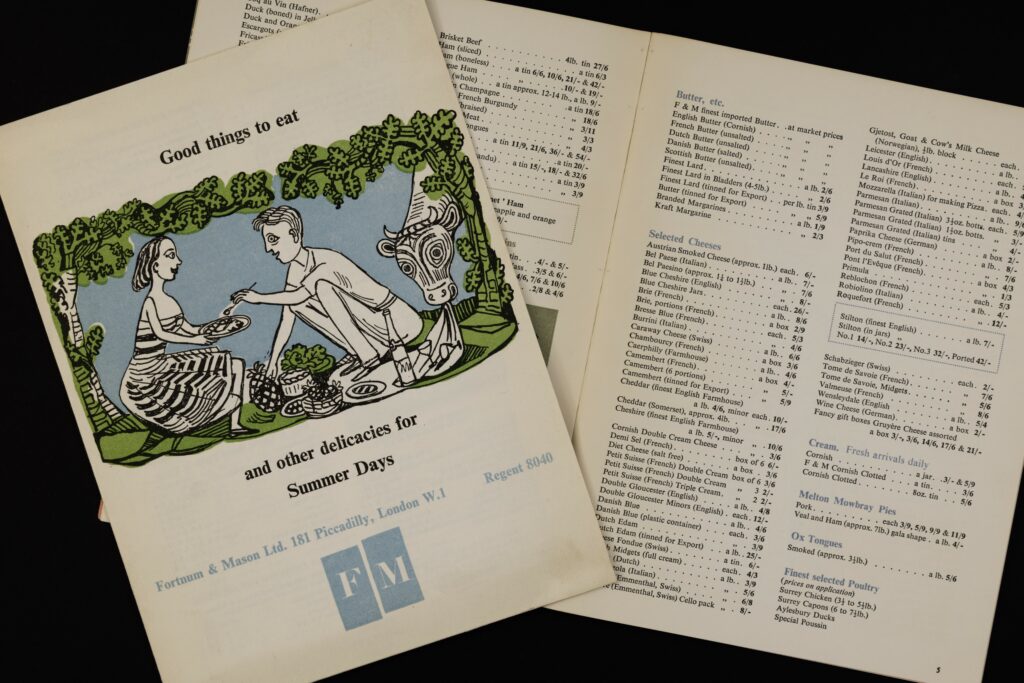
Cheese as a sophisticated delicacy
Clearly a post-war era publication, this price list was issued after food rationing and the ban on production of any cheese that wasn’t ‘Government’ cheese came to an end in 1954. It lists a selection of the finest English farmhouse cheeses and a wide range of delicacies from Western Europe, in typical Cold War fashion.
The front cover is illustrated by Edward Bawden (1903-1989), renowned war artist, graphic designer and muralist. As well as working for Curwen Press with Eric Ravilious and teaching at the Royal College of Art, Bawden received commissions from London Transport and other commercial businesses including Fortnum & Mason and Imperial Airways.
Fortnum & Mason – Good things to eat and other delicacies for summer days : [a price-list] [decorations by Edward Bawden]
PRINTING COLLECTION–658.874085-FOR
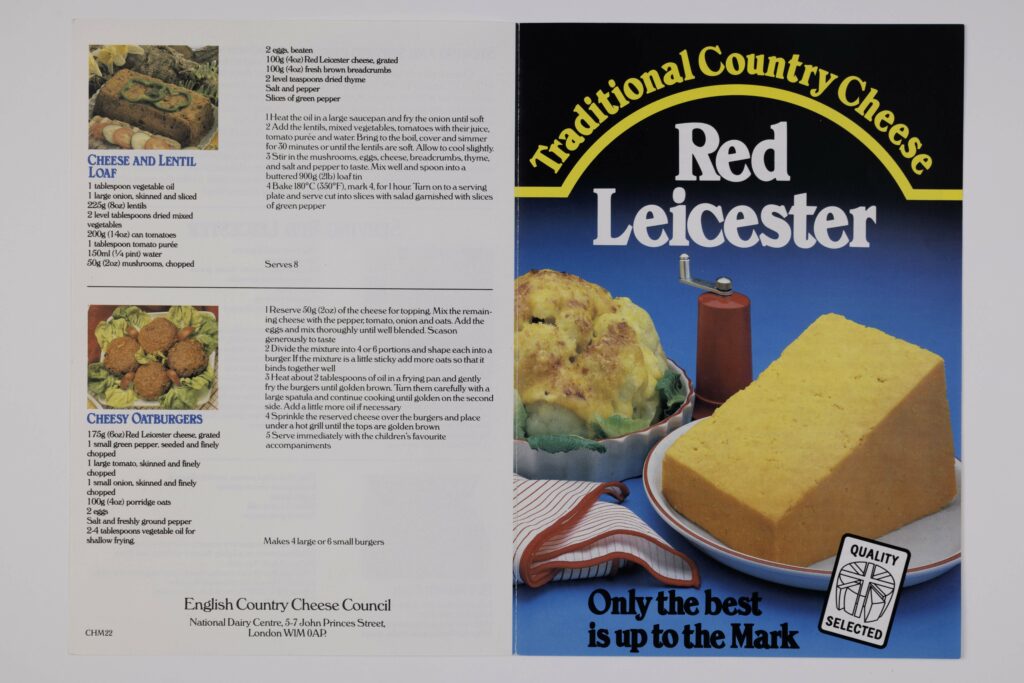
English Country Cheese Council
An advertising leaflet for Red Leicester, issued by the English Country Cheese Council in the 1980s as part of a series of promotional leaflets on traditional English cheeses. Despite the emphasis on the words ‘traditional’ and ‘country’, the photographs convey an image of a heavily-processed and artificial product, but in keeping with the aesthetics of the time.
The Dairy Collection, part of the MERL library and archive, consists of deposits from several disbanded bodies involved in the marketing of milk and dairy products, including the Milk Marketing Board and the National Dairy Council, which was associated with the English Country Cheese Council.
Advertising leaflets for English Cheeses, with recipes / English Country Cheese Council. [1980s]
D88/8
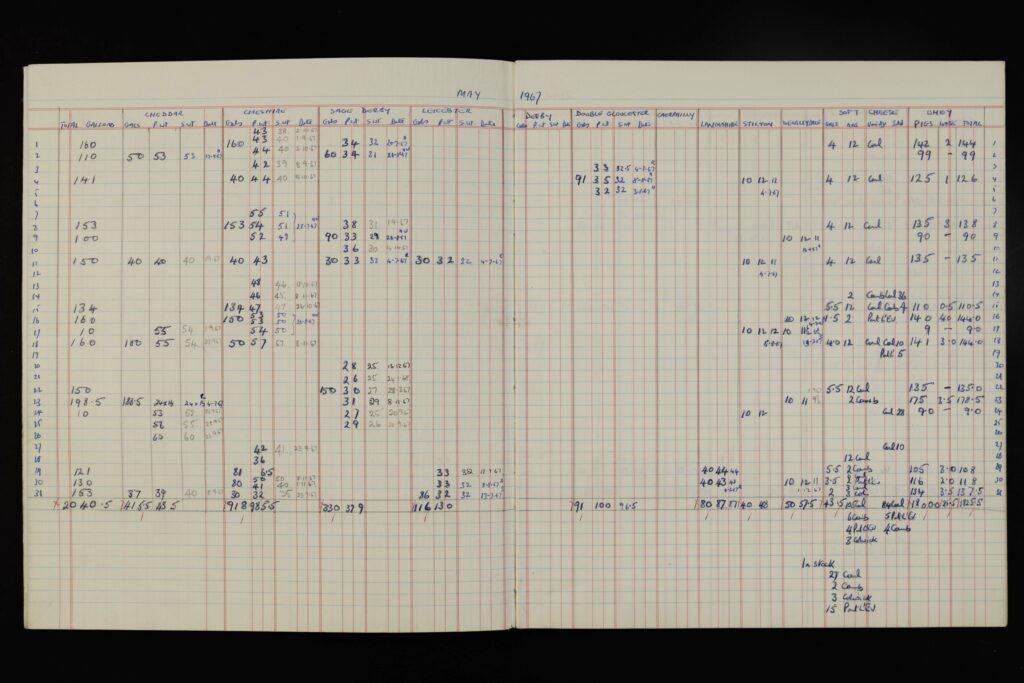
Cheese production records
A spread of two pages from the cheese record book of Studley College, where the production of cheese and quantities of milk used were meticulously recorded every day. Studley College was an horticultural and agricultural college for women, which operated near Studley, Warwickshire, from 1898 until its closure in 1969. The MERL holds a collection of horticultural trophies and medals as well as their archives.
The production of cheese must have played an important role at a women only college like Studley, and this appears to be confirmed by the large quantities of Cheddar and Cheshire listed in these records for May 1967.
Studley College cheese record book
FR MS1088/3/5
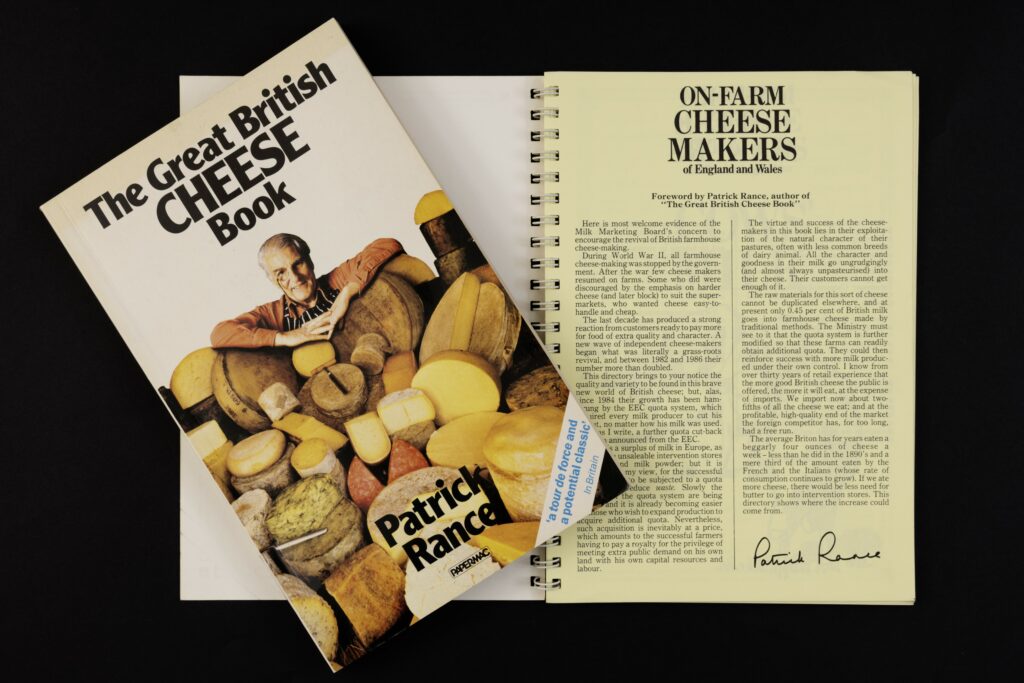
Patrick Rance and the farmhouse cheese revival
In ‘The Great British cheese book’, Patrick Rance estimated that in 1939 there were still about 1550 independent farms making cheese in traditional form from their own unpasteurised milk, having survived the factory competition of the 1930s, but 10 years later their number had dwindled to about 100.
In the 1980s, Rance (1918-1999), a cheesemonger from Streatley, Berkshire, was instrumental in promoting authentic farmhouse cheesemaking and calling for a revival of regional varieties. He is credited with saving several cheeses from extinction and his legacy is visible in today’s rich landscape of artisan cheesemakers across Britain.
Patrick Rance’s books enjoyed great popularity in Britain and France, a sign of his international reputation.
The great British cheese book / Patrick Rance. London : Macmillan, 1988. MERL LIBRARY–4390-RAN
On-farm cheese makers of England and Wales / foreword by Patrick Rance. Thames Ditton : Milk Marketing Board, 1986. MERL LIBRARY–4390-ON