Research post: X marks the spot
-
Author
- Alison Hilton
-
Published Date
- March 9, 2015

We’ve all been very busy researching nine new galleries for the Our Country Lives redevelopment, covering everything from wagon construction to rural fashion. What caught our eye recently, however, was a one-way, horse-drawn Butterfly plough.
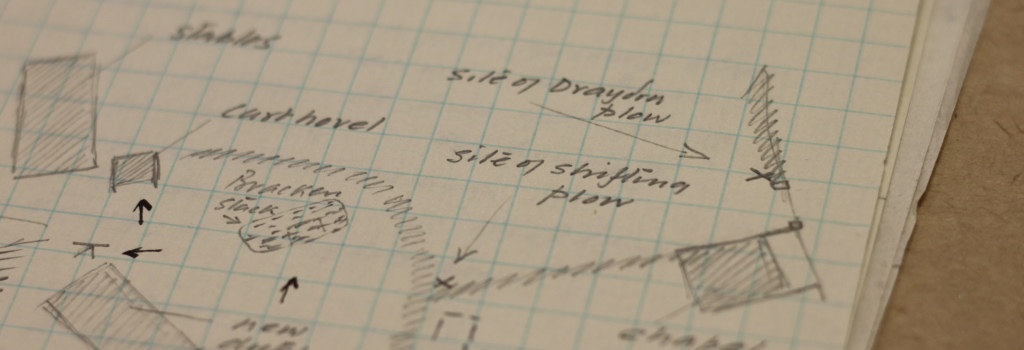
While delving into our accession files for its measurements we found this interesting little map tucked into a sheaf of correspondence (below). It depicts a working farm in Polventon, Cornwall where our plough came from. It shows a house, barn, stables, a waggon and cart hovel, a ‘new building’ and a chapel. It also has some queries – such as one building labelled ‘bullock house? Pigs?’. I doubt we’ll ever know which.
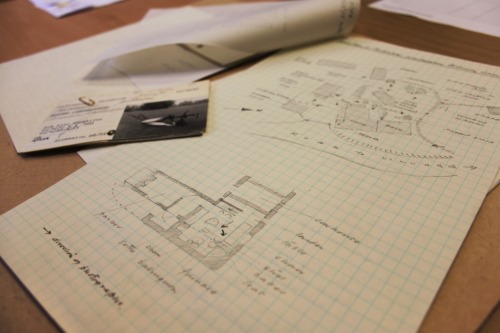
The correspondence also revealed that the farmer used this horse-drawn plough to fill in the gaps which his tractor-drawn plough could not reach, such as by the hedges, showing the perseverance of old technology where practical. The curator has marked two X’s on the map where two ploughs were found in hedges (including the one in our collection). Not exactly buried treasure to most people, but valuable to us nonetheless.
What is also particularly interesting for us is the inclusion of a floor-plan of the farmhouse (below), labeling familiar objects in our collection such as settles. Considering our plans for the redeveloped galleries include a focus on ‘Hearth and Home’, exploring both the romanticised view of the cottage and the too-often grim reality, these plans may well shape our interpretation and object layout.

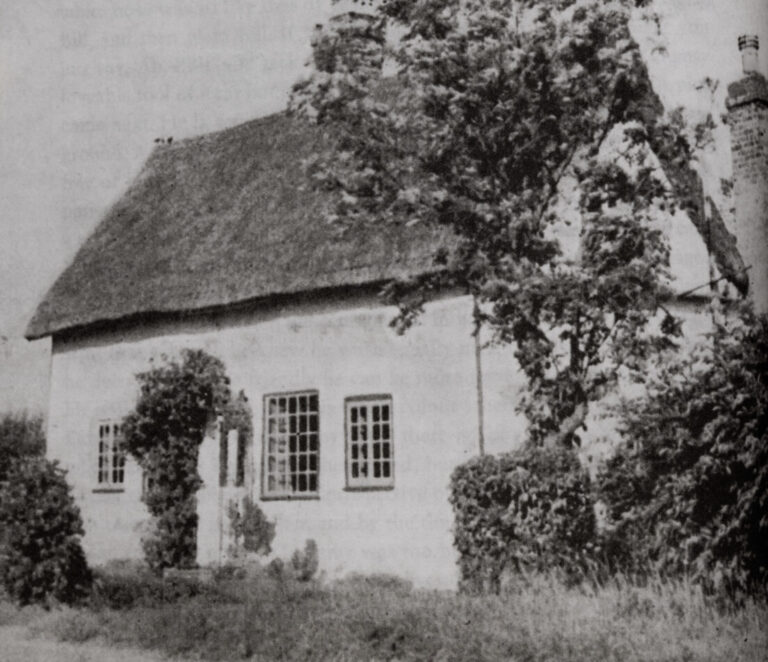
The farmhouse still exists in the exact same shape, although the ‘waggon hovel’ has since been converted into a garage. No longer used as part of a farm, you can rent out the house for a self-catering holiday, which is itself an interesting comment on the changes in farming and rural real estate over the past fifty years.
Hopefully we’ll have more interesting things crop up as we research over the next few weeks!
-
Tags
-
Author
- lottiewood
-
Published Date
- February 19, 2026
“I am the farm worker going home at evening”: gender fluidity, rural landscapes, and the Women’s Land Army
Library trainee Lottie Wood reflects on gender fluidity in the work of E. M. Barraud, and Barraud’s reflections on her time in the Women’s Land Army