Psychology students' research project: children's word recognition in museums
-
Author
- Alison Hilton
-
Published Date
- January 20, 2014
Over the Autumn Term we had the pleasure of hosting a psychology research project at the Museum of English Rural Life for two University of Reading undergraduates, Alex Tait and Laura Postlethwaite. Alex and Laura used a selection of objects from the Museum’s collection to explore how children learn new words in a museum setting. In this guest post, they explain their research…
There have been many studies exploring how children use a museum, including many looking into a parent and children’s interaction in a museum. This research is useful as the findings can be used by the museum itself to improve their services – such as through information packs or museum layout – so that their collections can become more effective for children.
When we were planning our third year project, there was an option to carry out a project at MERL – no specific outline was set as to what would be carried out and so we had an initial meeting with a few of the staff from the museum, to come up with an idea that would incorporate both our requirements for our project, but also one that would benefit the museum in some way. After much discussion and working out what was achievable for us, we came up with a project looking at how children learn names of novel objects, and whether words and/or pictures would aid this learning or not. This links to our studies about a child’s word learning and will also benefit the museum and help their plans for their redevelopment. Hopefully, the museum will be able to use our findings to develop useful resources for children to use when visiting the museum.
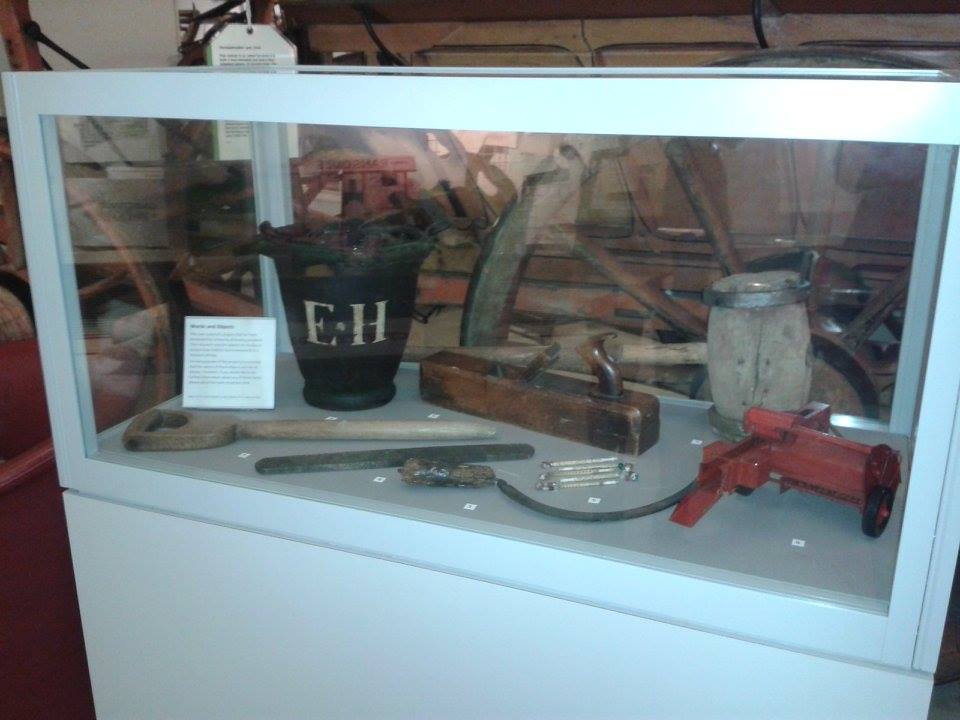
Following the generation of this idea, we came up with a standardised procedure that we could use to test a child’s word learning. We then chose 10 novel objects that we could teach a child the names of – we had to ensure that the children would not know the names of these objects prior to this study. These were then placed in a case in the museum (seen in the picture) for use during the research. Information cards containing words and/or pictures of these objects were then prepared and then the research could start!
We carried out a pilot study in the museum on Apple Day, and started our actual research after a few alterations in October half term so that we could carry out the research on children of our target age as they visited. Our next steps are to collate all of the data we collected over the week in the museum and see if we found any significant results.
Hopefully our findings will be useful and able to inform the museum on how to usefully interpret their collections for this age of audience during their potential redevelopment next year! We look forward to sharing our results in due course.
Alex Tait and Laura Postlethwaite