Our Country Lives update: Bringing our wagons down to earth
-
Author
- Alison Hilton
-
Published Date
- March 2, 2015
 Designs for the gallery and possible objects for display are coming together[/caption]
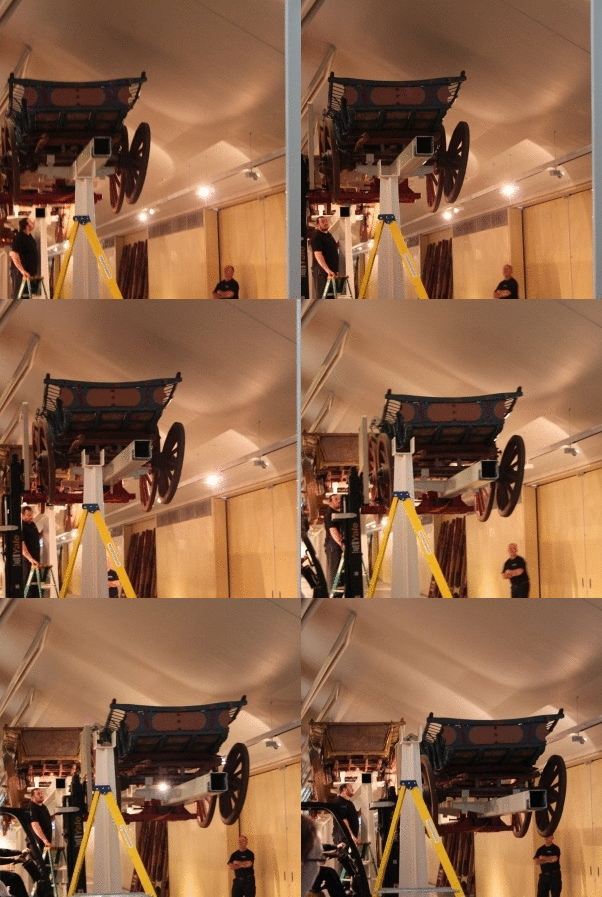
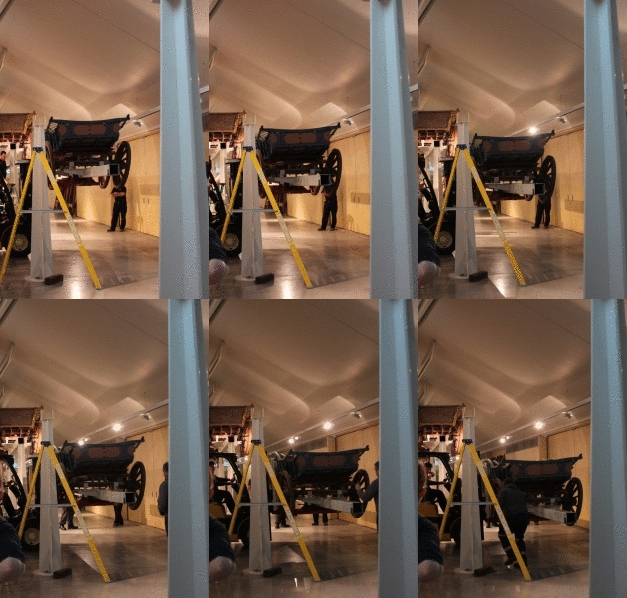
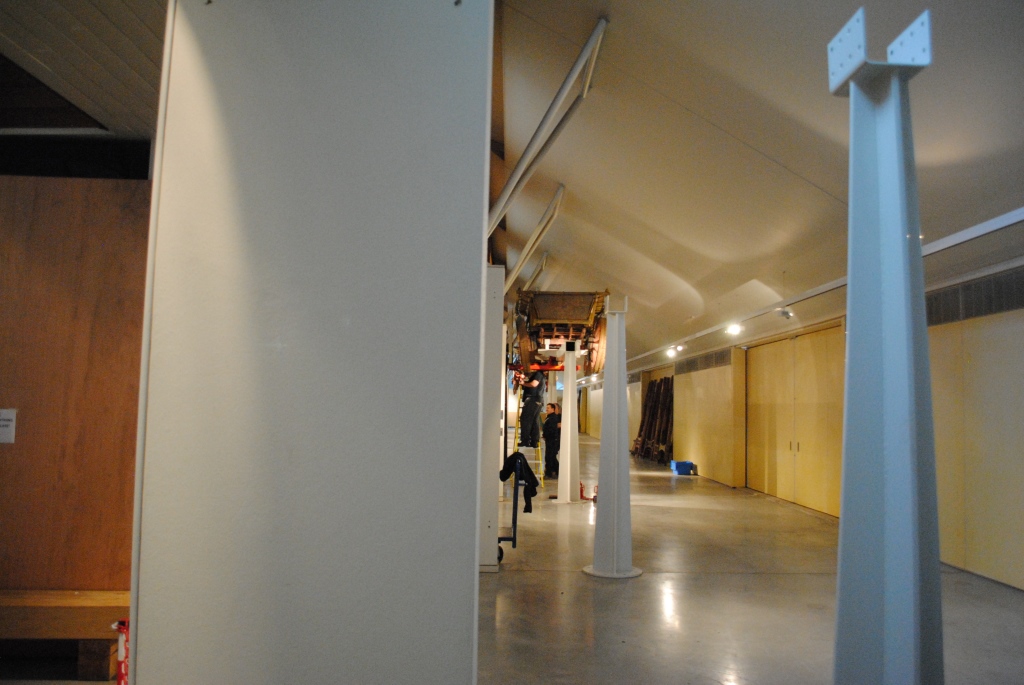
We managed to finish the job in one day with the help of a specialist removal company, a fork-lift truck and much bated breath. If you haven’t been to the Museum before, for the last ten years we have had several wagons raised from the floor on a monorail running down the length of the galleries. Each wagon was attached to its own beam which was first removed from its supports and brought to the floor; once the wagon’s own wheels were supporting it, the beam was then lowered from the wagon itself and taken away. One main worry was that since the wagons have been off their wheels for so long, and their wood so desiccated from the dry atmosphere of our building, that they may be a little brittle when on the floor again. They all, however, came down without a hitch and are now waiting with the rest of the collection to be redisplayed.
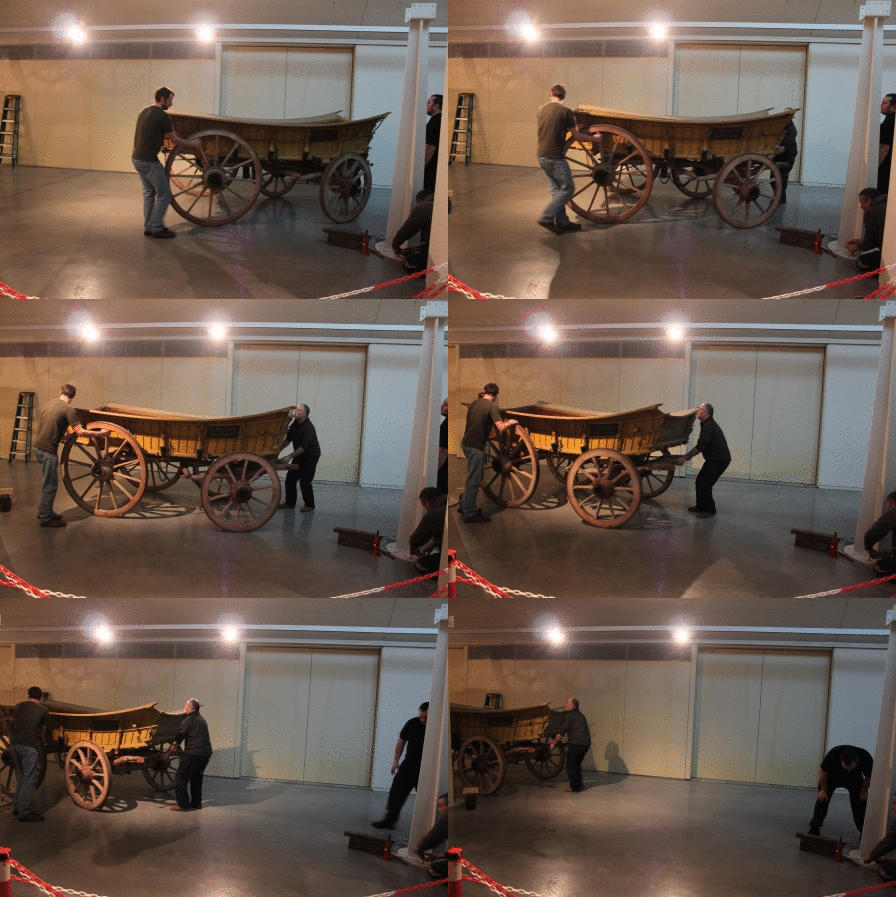
The reasoning behind their removal is that the wagons currently take up precious space in the rafters where we would like to build a new gallery for our ploughs. The Wagon Walk, where the majority of our wagons and carts will now be, will allow us to show our nationally important collection at its best. As well as exploring the craftsmanship and technical complexity of a wagon’s construction, we will also be delving into personal stories of those behind the wagons and how they used them. We will reveal how these wagons are intimately tied to their landscapes but also to local building traditions, and how the geography dictates the size, shape and construction of every single one of our unique wagons.
-
Tags
-
Author
- lottiewood
-
Published Date
- February 19, 2026
“I am the farm worker going home at evening”: gender fluidity, rural landscapes, and the Women’s Land Army
Library trainee Lottie Wood reflects on gender fluidity in the work of E. M. Barraud, and Barraud’s reflections on her time in the Women’s Land Army