The new buzz about bees : the Cowan Bee Collection
Find out about this important donation to the MERL Library
-
Author
- fionamelhuish
-
Published Date
- May 16, 2018
<<<<Written by Fiona Melhuish, UMASCS Librarian
As bees start to buzz around the boughs of spring blossom in the MERL garden, it seems a good time to announce one of our most important recent acquisitions: the Cowan Bee Collection. The collection, which was donated to us by Defra (the Department for Environment Food & Rural Affairs), contains 1,800 volumes of books, pamphlets and journals relating to bees and beekeeping (also known as apiculture). The items date from the sixteenth to the twentieth century, and were owned by T. W. Cowan (1840-1926), a co-founder and president of the British Beekeepers Association, who wrote a number of books on beekeeping himself and designed the cylindrical honey extractor.
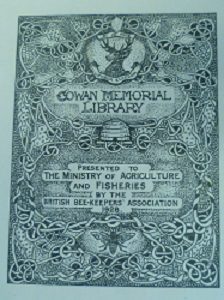
The collection, also known as The Cowan Memorial Library, contains works by many well-known writers on bees and beekeeping, including multiple editions of ‘The feminine monarchie’ by the Rev. Charles Butler (1609), one of the greatest books on beekeeping, together with works by other important writers on apiculture including Joseph Warder, Thomas Wildman and James Bonner. The oldest book in the collection is a rare early French translation of Lucius Junius Moderatus Columella’s ‘De re rustica’ (‘On rural affairs’), published in Paris in 1555. Columella was a writer on agriculture in the Roman Empire and ‘De re rustica’, an agricultural manual on animal husbandry, beekeeping and other subjects, is an important source on agriculture in Ancient Roman times. The Cowan collection also contains two 1579 editions of Thomas Hyll’s ‘A profitable instruction of the perfite ordering of bees’ which was first published in 1568, and is thought to be the first British book on bees.
The British Beekeepers Association once described the Cowan collection as the most comprehensive collection of its kind in the world. Cowan was a great traveller and a skilled linguist, and was well-known to beekeepers around the world. In fact, what makes this collection particularly unique and interesting is the wide range of foreign language material, including publications from France, Germany, Italy, Sweden, America, Poland and Russia, many of which are very rare and not found in other academic libraries or in the British Library.
The collection complements our Bee Collection of c. 570 titles, which includes the Cotton and H. Malcolm Fraser collections. Material relating to bees can also be found in our Cole Library of early medicine and zoology, and the library and object collections of the MERL. The acquisition of the Cowan collection has made our bee collection one of the largest in the UK, and certainly a centre for historical material on bees and apiculture in the academic library sector. In terms of collections held elsewhere, the only other major collection is the IBRA/Eva Crane Library collection at the National Library of Wales. This collection, although strong in post-1919 material, lacks earlier works, especially in languages other than English, whereas the focus of the Cowan collection is on pre-1900 publications from across Europe.
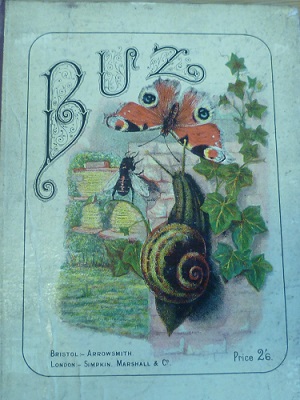
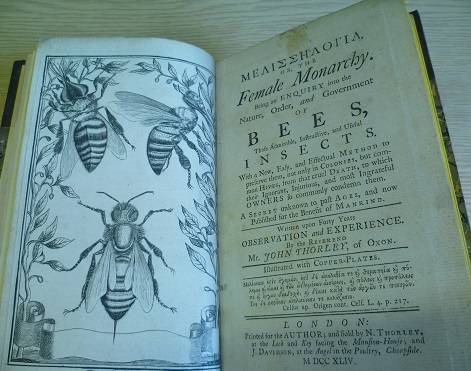
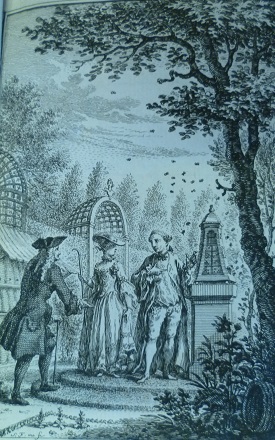
The collection also includes guides for children on bees and beekeeping, and alongside practical manuals, guides and other writings, there are also a few stories and poetical works concerning bees, ranging from works by Virgil, to ‘Buzz a buzz; or, The bees’, a book of verse for children by the comic author Wilhelm Busch (1872). Many of the publications also have a wealth of visual interest with striking book cover designs and fine illustrations.

We are delighted to announce that the Eva Crane Trust have generously awarded us a grant to catalogue the Cowan Bee Collection on our online library catalogue. This will help us to make this fascinating collection accessible to researchers and other interest groups, help to promote the use of the collection in historical bee research, and potentially open up new research avenues into the history of beekeeping. At the moment we are busy carefully unpacking the books and putting them into alphabetical order in our collections store so that the books are easy to find using the collection handlist prior to cataloguing. We are looking forward to discovering more about the books held within the collection as part of the cataloguing project later this year, and will be writing about some of the treasures that we find on our social media platforms, so watch this space!