International Women’s Day 2026: Hidden histories
Discover the stories of three women curators, collectors, and designers in the 20th century
-
Author
- madeleineding
-
Published Date
- March 6, 2026
Women have been incredibly important to shaping our collection. They have been donors of objects from their own and inherited collections. They have created and publicised our work. And they have been key to developing The Museum of English Rural Life from a static repository into a dynamic and inclusive institution.
For International Women’s Day, we’re celebrating three women who played a huge part in the Museum’s story in the 20th century. These accounts arise from research by volunteers taking part in our Further Afield project, highlighting the important roles that women have undertaken in our history.
Many thanks to our volunteer contributors: Julie Rose, Julie Fletcher, Catherine Ewart, and Mary Chambers!
Muriel Rose: 20th century crafts
Our collection includes a significant number of objects that were developed by Muriel Rose (1897-1986) for the British Council in the second half of the twentieth century.
Muriel was a remarkable woman. Contemporary accounts described her as strong-minded and formidable. She needed these qualities to thrive at a time when senior roles in the arts were dominated by men. And thrive she did, making a lasting impact by promoting and collating crafts, often created by women, for the benefit of future generations.
Muriel’s work helped to ensure that British crafts survived the more turbulent periods of the twentieth century. She opened a gallery in London after the First World War, at a time when crafts were threatened by increasing mass production. She sourced work from women working in rural areas through the newly established Rural Industries Board and presented it alongside work by established artists to show that it had equal value. Muriel displayed work by her large network of talented female producers, many of whom were in same-sex relationships, alongside that of male producers. The gallery was hugely successful. Celebrity clients, including film stars and royalty, helped to make traditional crafts fashionable.
During the Second World War, when the market for traditional crafts collapsed in Britain, Muriel played a key role in promoting British crafts overseas by curating a British Council exhibition which toured North America. After the war, this work continued with a major touring exhibition of Australia and New Zealand. Muriel played a significant role in developing a permanent craft collection at The British Council, the first Government-sponsored initiative to collect crafts for the nation, much of which is now in museums. And her talents did not stop there. She was also an influential author, publishing the first history of studio pottery in England, and was a founder of the influential Crafts Study Centre in Farnham, Surrey.
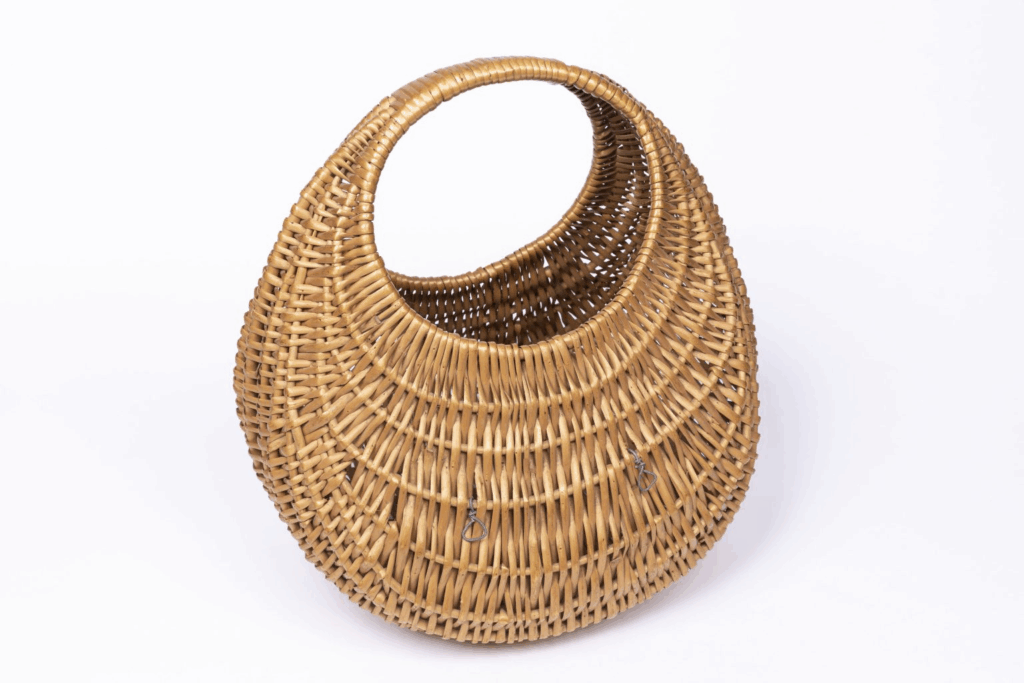
Margaret Fuller: Women’s friendly societies poleheads and banners
Our collection of 900 friendly society poleheads was curated and extensively researched by Margaret Fuller. Margaret was a curator at The MERL who shaped the collection of friendly society poleheads in the 1950s and 1960s.
Friendly societies provided an early form of social security: members paid a monthly or quarterly subscription and received benefits such as sick pay, medical costs, pensions, and even help with funeral costs. Around 6 million people were friendly society members in the late nineteenth century.
Most societies were run for and by men, but there were also societies specifically for women. In 1874, 460 female friendly societies were registered in England and Wales, with over 27,000 women being members; the actual numbers may have been much higher. Women’s societies had an important social role, providing opportunities for women to meet, support each other and have a good time – with some men complaining that women’s societies were ‘raucous’ and that they should be banned. Women’s friendly societies may also have taught women to organise, giving them skills that became invaluable in the later suffragette movement.
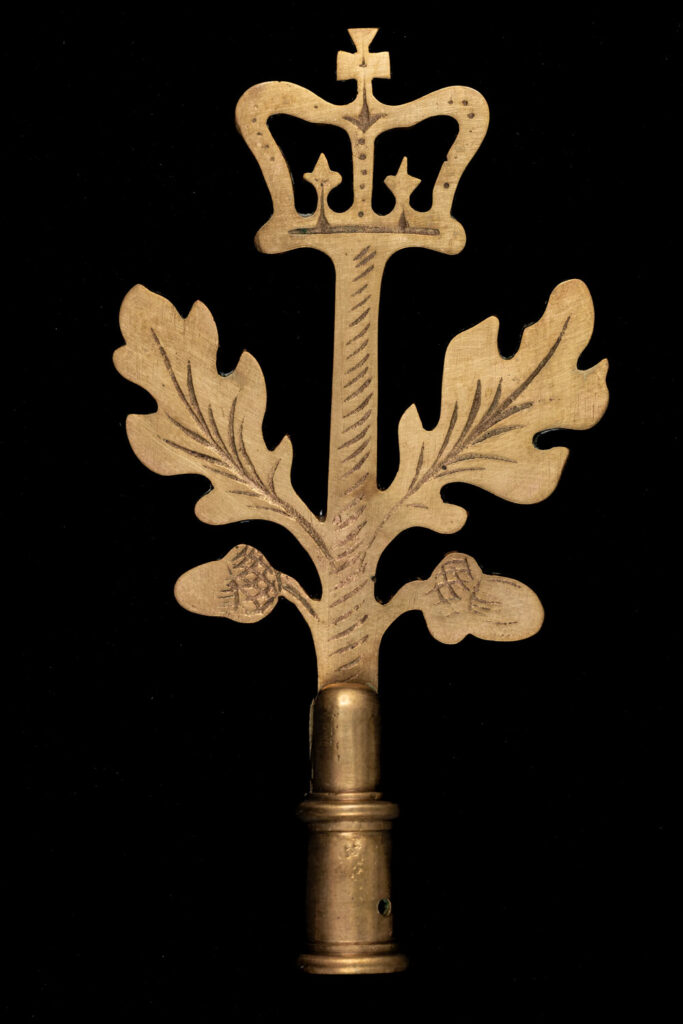
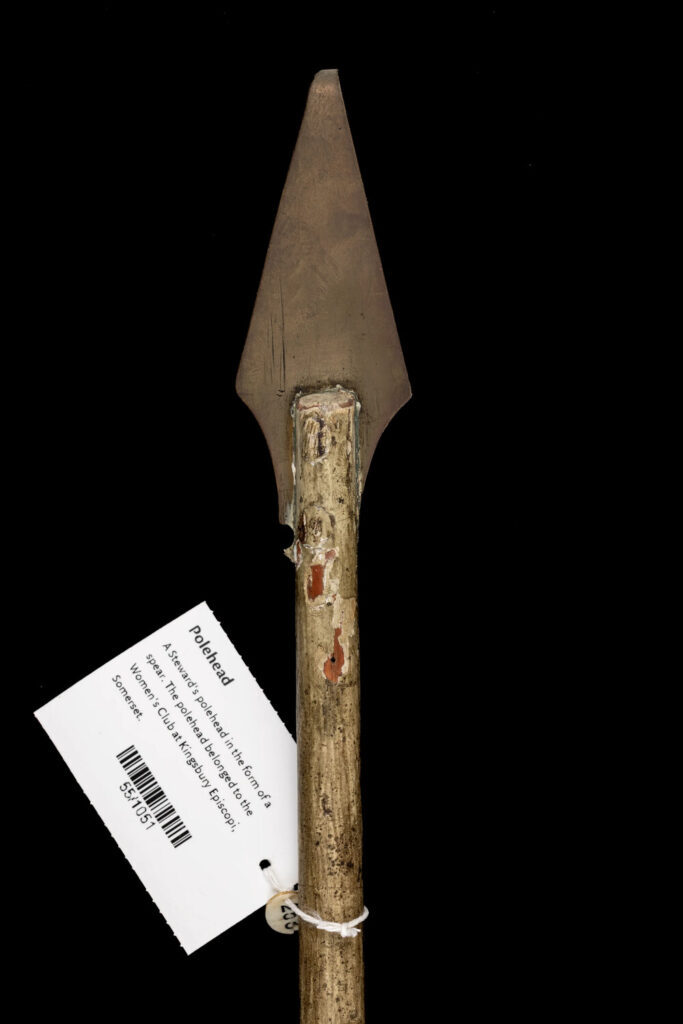
Friendly societies held annual feast days, usually in the summer, when members gathered to parade around the village and attend a celebratory church service, followed by a feast, speeches and sometimes dancing. In male friendly societies, each member carried a brass polehead – as represented by the many held at MERL.
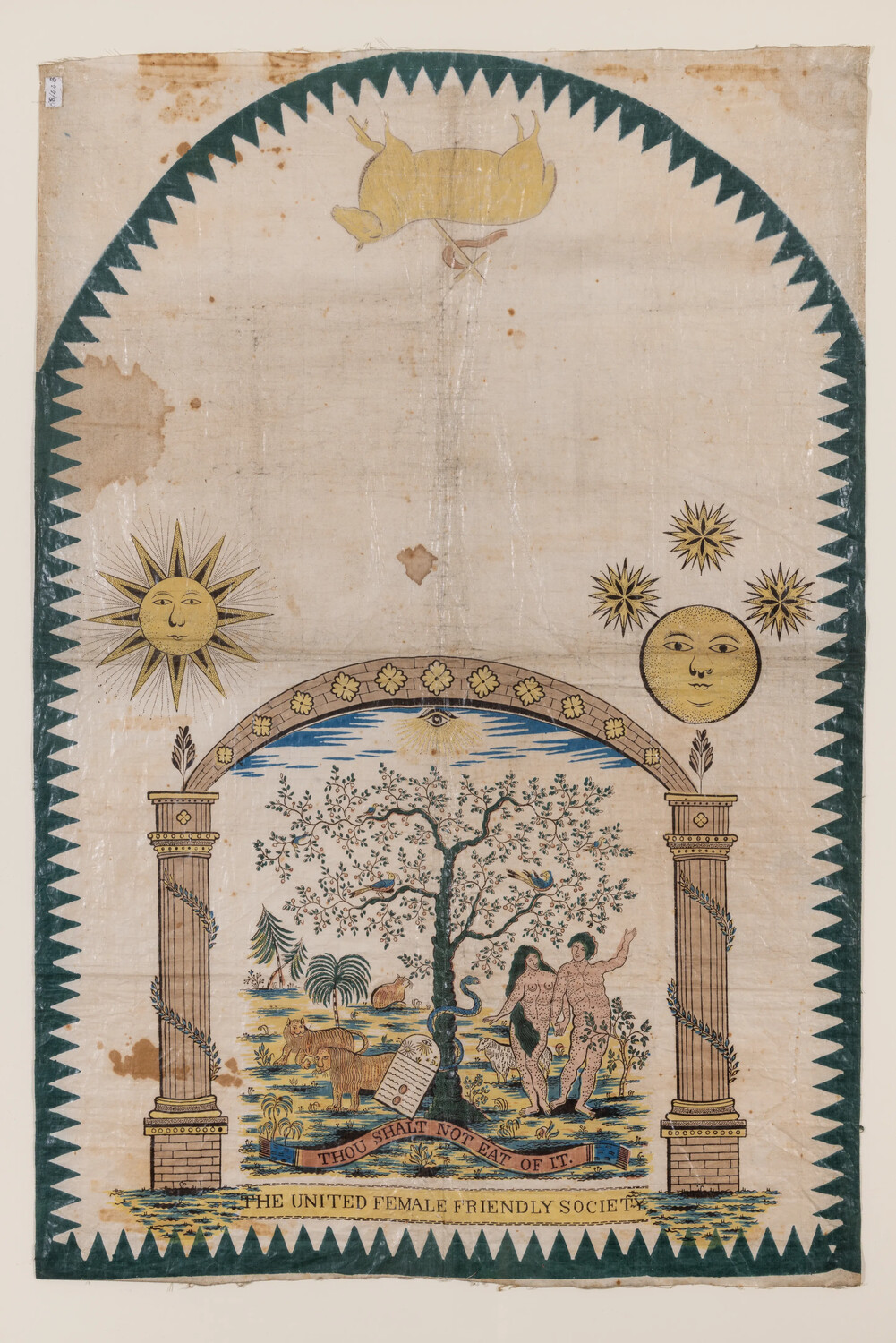
Women’s processions were more often led by banners, which could be made by women themselves with the materials and skills available to them. We only hold one example in our collection: the banner of the United Women’s Friendly Society.
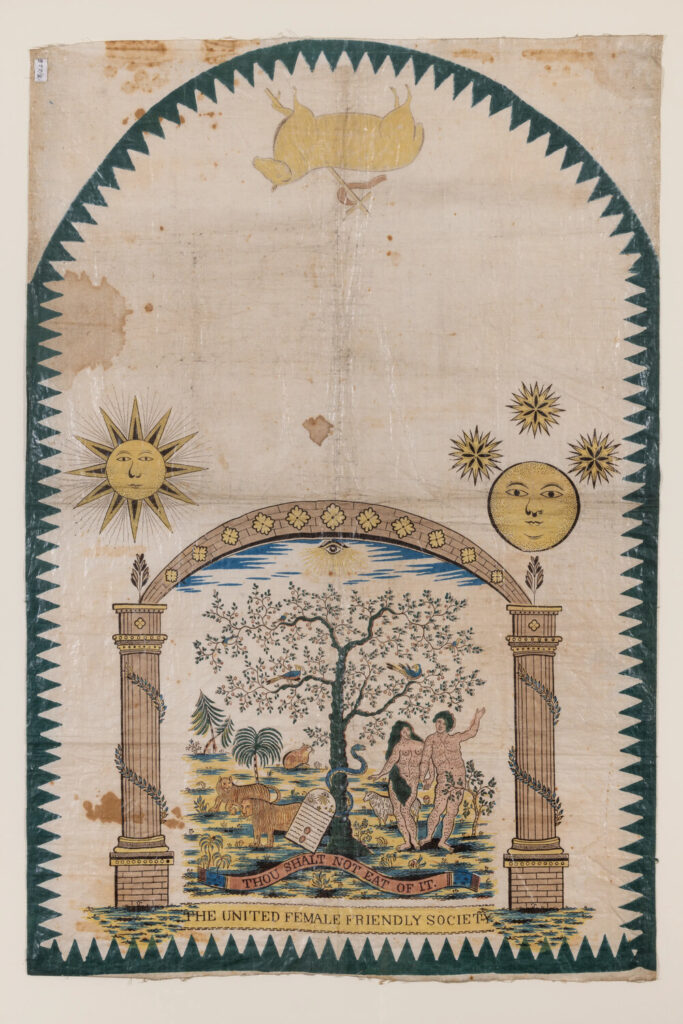
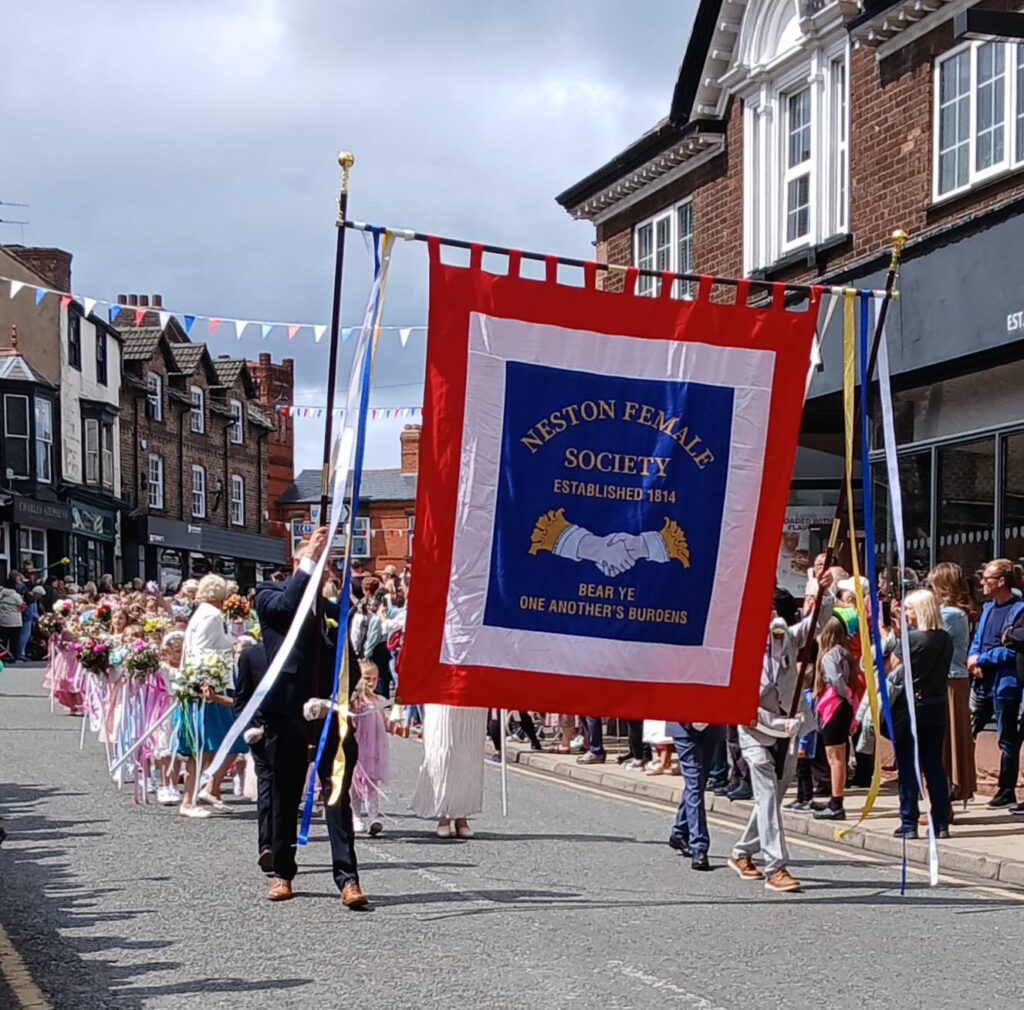
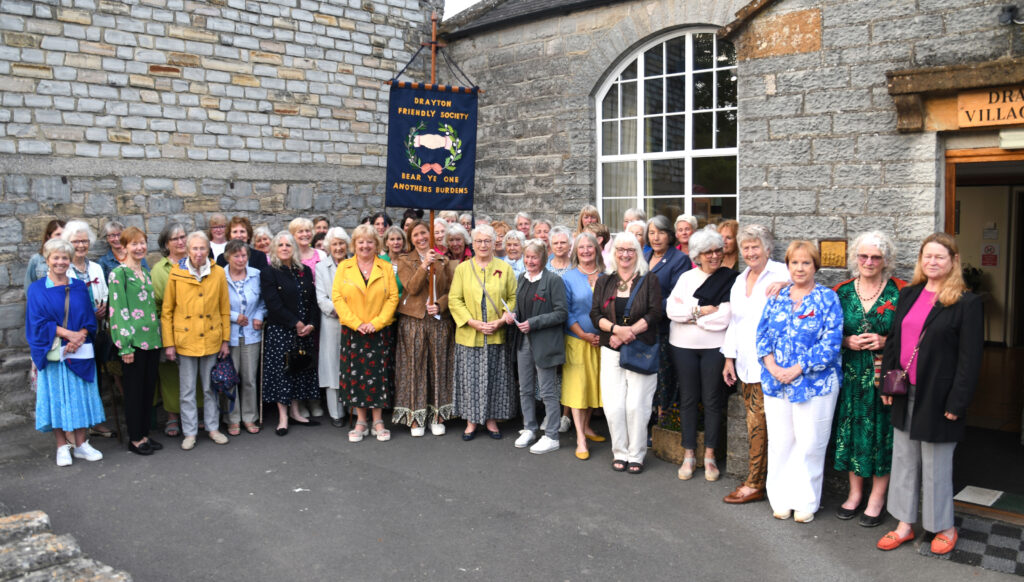
Although women’s friendly societies no longer support their members financially, some have survived as social groups. The 218th Nether Stowey Women’s Walk will be held this year, as will the annual feast days of Neston Female Society and the Drayton & Muchelney Women’s Friendly Society. All three march with their banners, continuing to celebrate women supporting women.
Enid Marx: Popular art
Enid Crystal Dorothy Marx (1902-1998) – a distant relative of Karl – was an accomplished English textile designer and painter. She was one of the women whose work was promoted by Muriel Rose. She became the first woman engraver to be designated as a Royal Designer for Industry. Her work included designing London transport posters and textiles and British postage stamps. A collector of contemporary ephemera, she and her partner, historian Margaret Lambert, used their personal collection as the basis for publications focusing on ‘English Popular and Traditional Art’. They described their objects as ‘the art which ordinary people have, from time immemorial, introduced into their everyday lives’ (English Popular and Traditional Art, 1946).
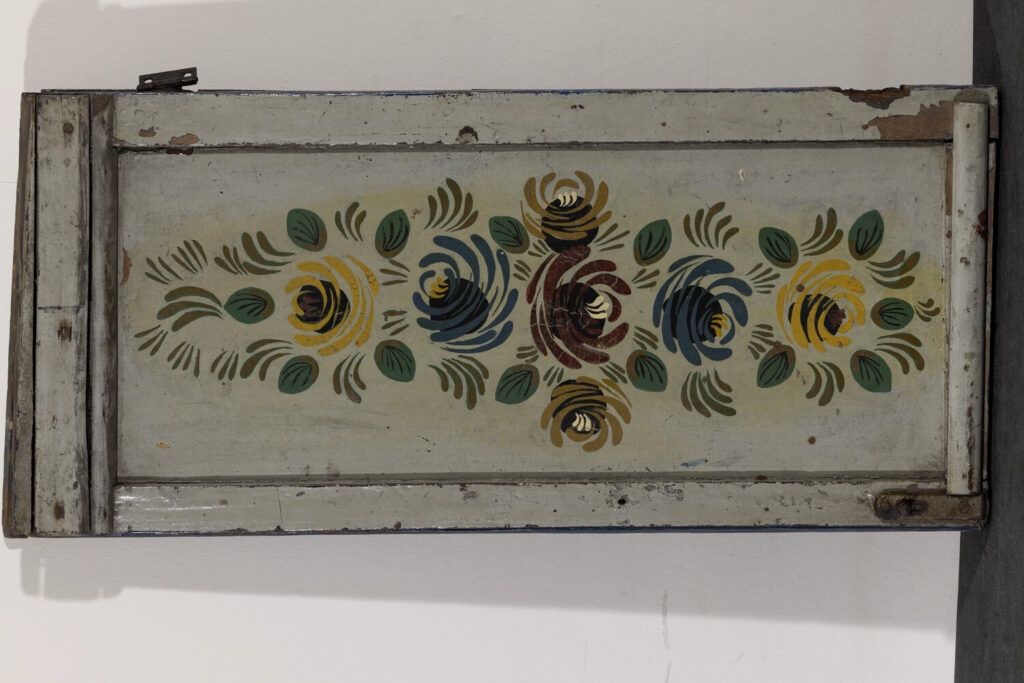
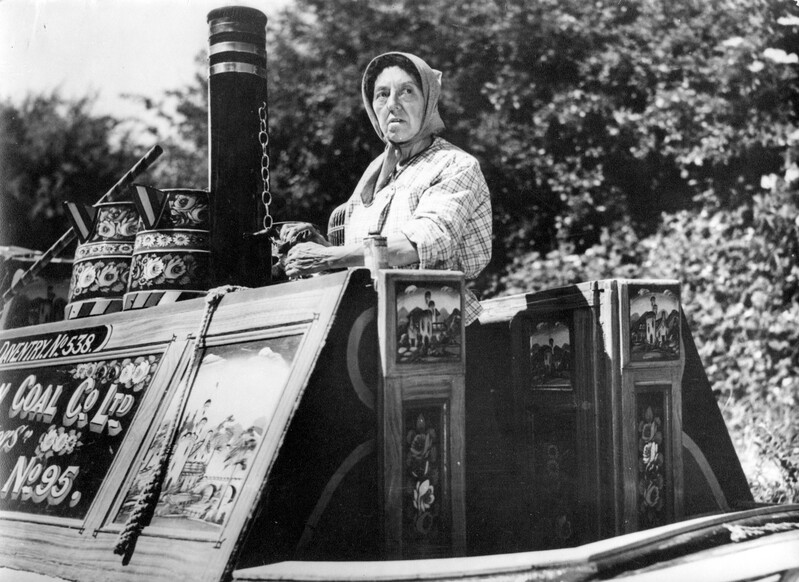
This simple narrowboat panel is one example of an object that Marx donated. Despite its basic and somewhat battered appearance, the panel holds many hidden links to women in its history. Originally, it would have been part of a 20th century canal boat, used by boatmen to transport goods along the country’s canals. As this form of transportation came into competition with the railways, boatmen began to move their families onboard to serve as free crew. The cramped living conditions were soon taken over by the women on board, who looked to improve the living environments of their families and began decorating everyday items, from water cans to the tack of the horses pulling the boats. This ‘Roses and Castles’ form of decoration was eventually adopted by boatyards to identify the boats that they built, but it began as a way of creating a community amongst a nomadic group of people crossing the country.
Our Further Afield project
As well as the stories of these women, our Further Afield project has uncovered other little-known stories of women and crafts in rural life. These histories all feed into our knowledge of the collection. They also demonstrate the importance of women’s crafts and creativity as part of their independence. For instance, the production of straw plait for the hat industry gave many women in rural communities their own source of income – which in turn allowed female friendly societies to thrive in those areas because women could afford to pay the subscriptions. Later, Muriel Rose’s galleries enabled female artists and crafters working in rural locations to keep producing, giving them the opportunity to share and profit from their crafts both nationally and internationally.
A pamphlet, Women’s Friendly Societies and How They Changed Women’s Lives, is in preparation. Watch this space for more blog posts from the Further Afield project, including more on the work of Muriel Rose, Enid Marx and the straw plaiting industry.
-
Author
- lottiewood
-
Published Date
- February 19, 2026
“I am the farm worker going home at evening”: gender fluidity, rural landscapes, and the Women’s Land Army
Library trainee Lottie Wood reflects on gender fluidity in the work of E. M. Barraud, and Barraud’s reflections on her time in the Women’s Land Army