"I read an interesting book about…"
-
Author
- Alison Hilton
-
Published Date
- March 5, 2015
In this post Project Officer Felicity Williams explains how she has amassed huge amounts of specialist knowledge by reading some very obscure books in the name of research.
My work on the Our Country Lives museum redevelopment has involved a lot of research – using collections but also MERL’s wonderful archive and library. Apparently, in meetings I often start sentences with ‘I read an interesting book about…’ and follow it with a snippet about a bizarre or incredibly niche topic. I am eternally grateful for my ability to become fascinated by just about anything!
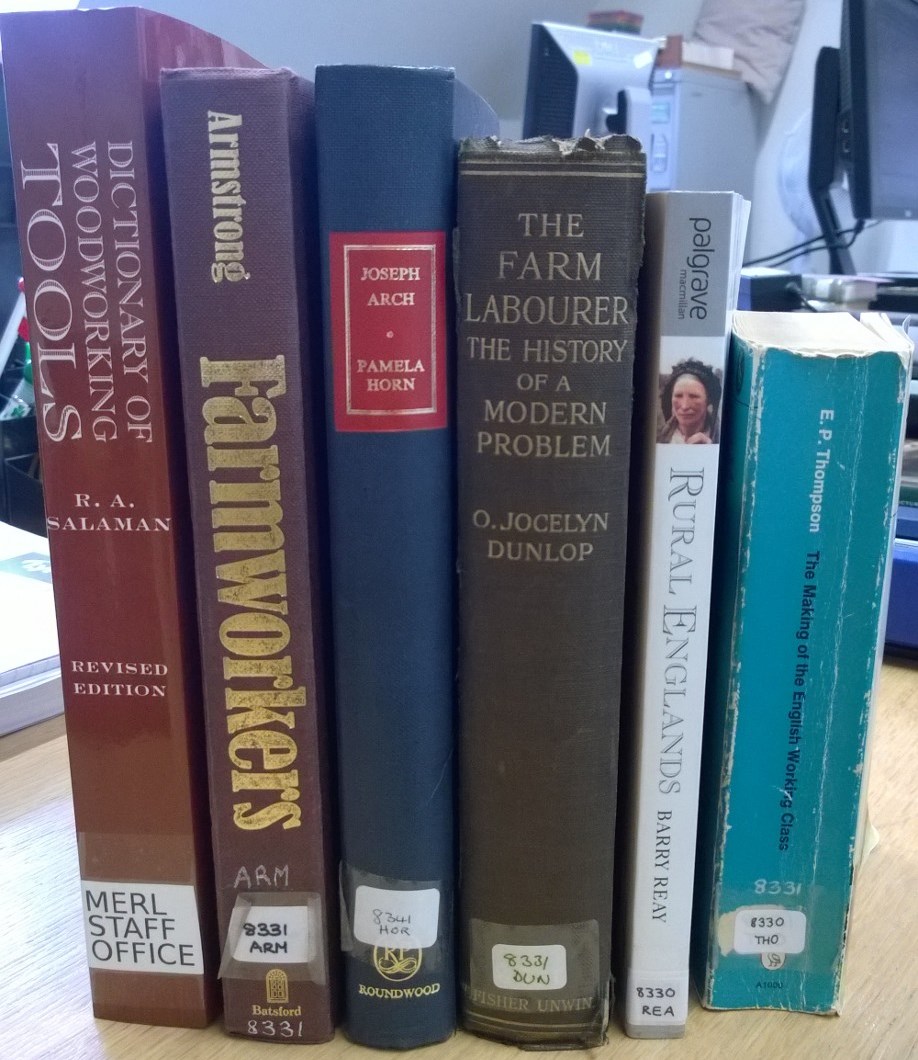
To honour the fact that today is World Book Day, it has been suggested that I share with you just a small sample of some of the books I’ve been encountering over the past months. Some are listed because I thought they were brilliant, some because they surprised me, and some because they are about amusingly odd-sounding topics. Hopefully I’ll have further chances to share with you some of the great books and resources and stories I come across during my research.
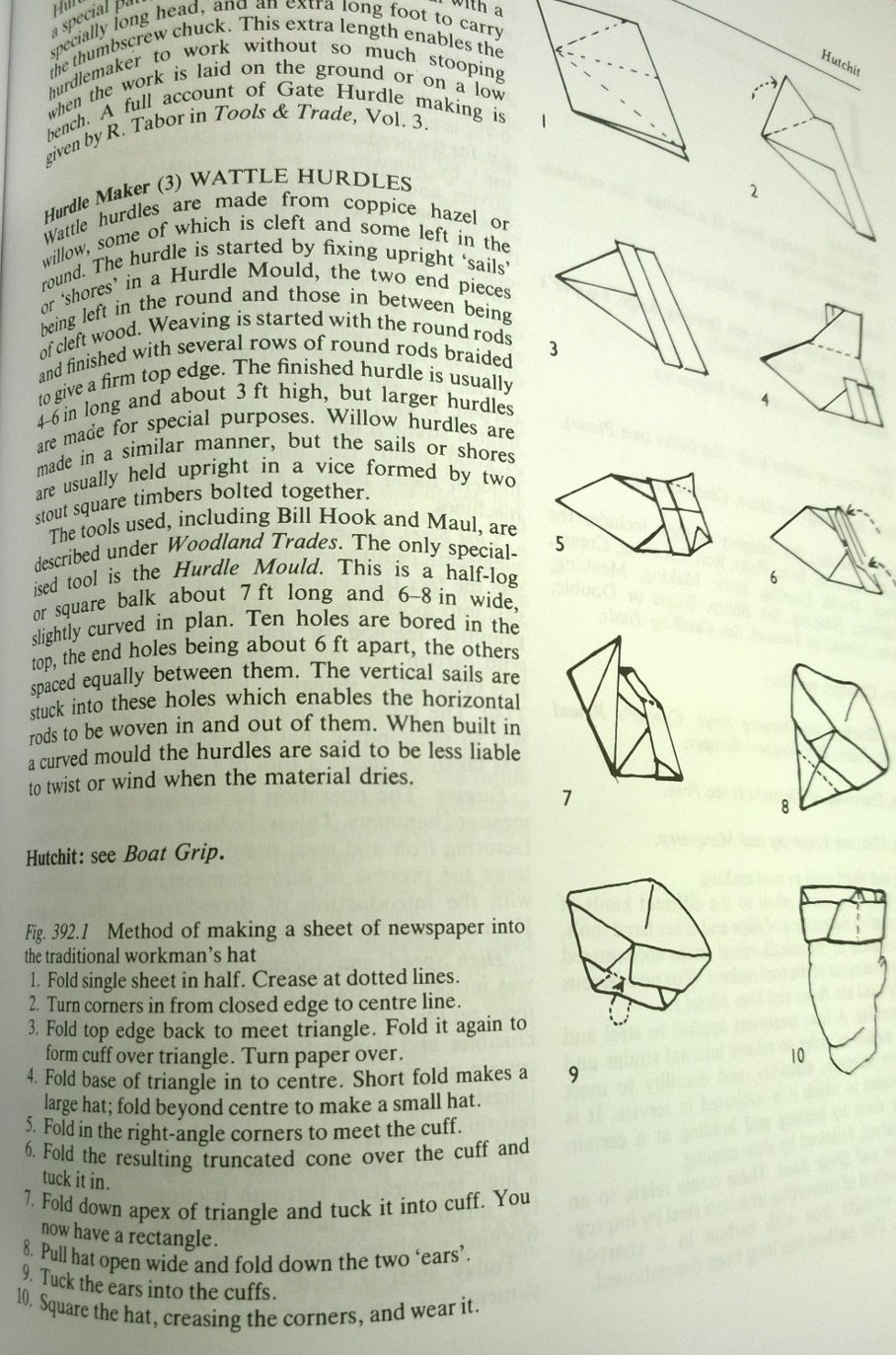
- Dictionary of Woodworking Tools by R. A. Salaman – I can’t quite convey just how much I love this book. Salaman lists, illustrates and describes the types and sub-types of tools used in an enormous variety of woodworking crafts and trades. It’s an indispensable resource for anyone learning about woodworking crafts. And it contains instructions for how to make a paper hat.
- Trees and Woodland in the British Landscape by Oliver Rackham – if you can only read one book about the British countryside, I suggest you choose one of Professor Rackham’s. He writes about the natural and social history of landscape with an engaging enthusiasm and terrifying depth of knowledge. He made me challenge what I thought I knew about trees and woodland.
- Cannibalism and Feather Pecking in Poultry by MAFF – because apparently chicken glasses are a thing. Seriously – little red spectacles for chicken, used to discourage the feather pecking and cannibalistic behaviour described in this bizarre but fascinating little Ministry pamphlet.
- Make a Meal of Cheese by The Cheese Information Service – a 1970s recipe book designed to encourage British consumers to use cheese in their cooking. Whilst the recipes have odd names, some of them sound pretty tasty (I’ll definitely be making ‘Savoury Welsh Surprise’ – leeks wrapped in bacon covered with cheese sauce). Others sound and look pretty revolting (peanut butter and cheddar biscuits, anyone?).
- Country Doctor by G. Barber – one of many books of the reminiscence genre in the MERL library. This one was written by an Essex country doctor in the 1930s. Some of the passages are amusing, some horrifying. Particularly those on the topic of early-twentieth century rural dentistry, which it’s worth sharing with you:
‘Once a week the local doctors used to give gas for their patients who were having extractions at the dentist’s, and we usually had to do half a dozen in the half hour which meant a fairly quick turn over, and hygiene was completely lacking… The face piece was all in one and the technique was to get the patient sufficiently far out so that all the necessary teeth could be extracted before he or she came round. This needed fairly precise judgement which only came with practice, and it meant that the dentist had to work as fast as he could. One with whom I worked longest was a really expert extractor indeed: he fairly whipped the teeth out, and he threw them wildly over his shoulder and made no attempt to do more than kick them under his bookcase before the next patient came in. I remember the look of absolute horror as a rather fastidious lady came in to have a tooth out and skidded on a bunch of recently extracted teeth which he had not had time to clear up’ (p. 49).
On a final and slightly silly note, one of my wonderful volunteers came across this absolutely essential article in a 1950s issue of the magazine Country Fair. Who knew that there was a type of rock garden known as ‘the almond pudding’, or that the ‘devil’s lapfull’ type was regarded with such disdain?

We’d love to hear about any books you’ve read about the English countryside that inspired you, or made you think, or made you laugh. Leave a comment here, or on our Facebook or Twitter pages.