Chalk or cheese? Choosing a wall hanging
-
Author
- Alison Hilton
-
Published Date
- April 12, 2016
<<Written by Adam Koszary, Project Officer.
Here at the MERL we have a problem. We need to decide which of our two enormous, beautifully decorated wall hangings to display, and we’d like your help.
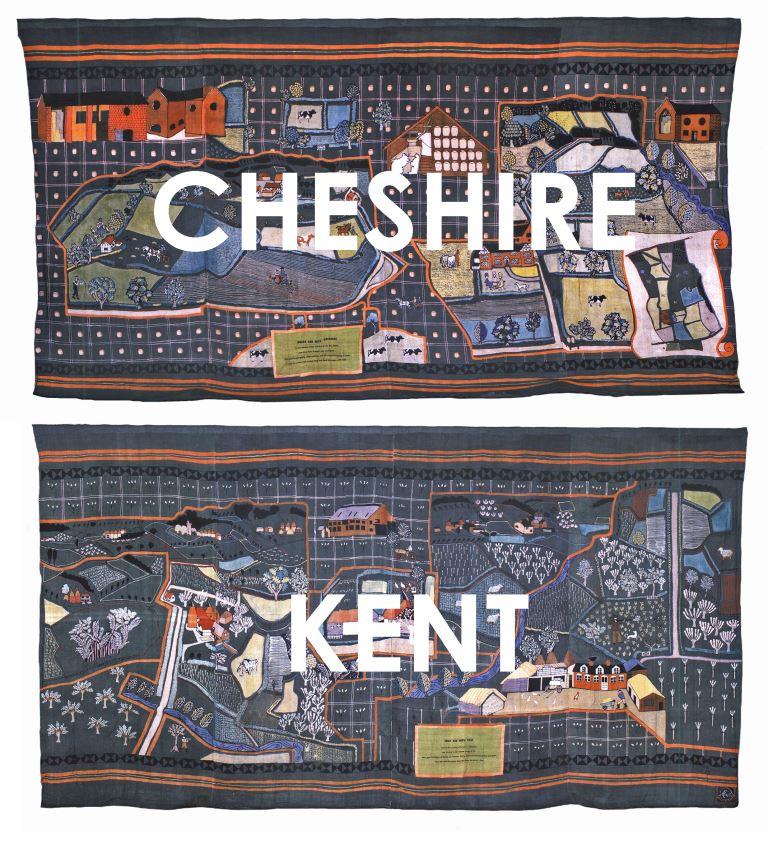
The wall hangings are two of seven which were originally displayed at the 1951 Festival of Britain, and were made by the ‘lost modernist’, Michael O’Connell. Both are a snapshot of a rapidly vanishing way of life in post-war England. One depicts Cheshire, and the other depicts Kent. They have been in our stores for 65 years, and only seen by a few researchers on request.
The wall hanging will be displayed in a bespoke case measuring 7×3.7 metres in our new extension. The choice of which to display first is not one to be taken lightly, as it will be displayed for five years before being replaced with the other.

The chosen wall hanging will be the centrepiece of the new museum. These hangings encapsulate the messages we want to share with the public: that the English countryside is beautiful, varied and personal.
To stand in front of one of O’Connell’s wall hangings is to be dwarfed. You may first take a moment to admire the craftsmanship and artistic skill that went into such a massive undertaking. The background of each hanging is a convenient deep green, the common colour of the English countryside. You then take in the detail – perhaps some of the larger buildings, a cow or a field. With closer scrutiny you will notice the woman feeding her chickens, the juxtaposition of heavy horses and tractors, or the cheeses stacked in an old barn.
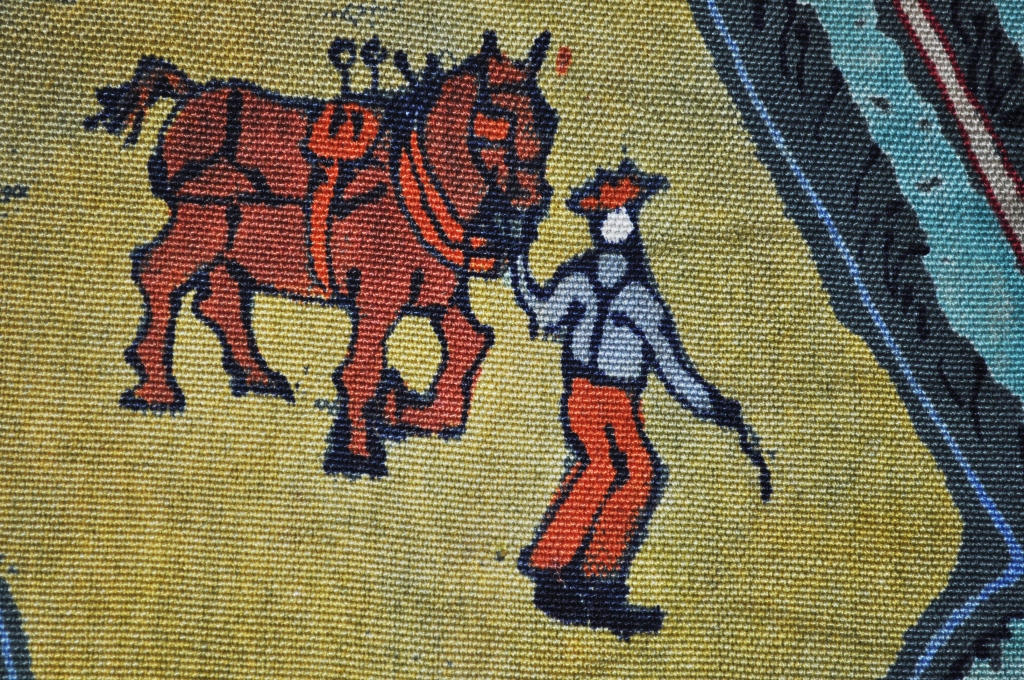
Nothing is an accident. O’Connell travelled the length and breadth of Britain, immersing himself in each region’s traditions, architecture, crops, animals and people to produce these hangings.
Each one is a special tribute to the different ways of rural life in Britain, and we honestly cannot choose between the two which have been conserved and are ready to be displayed. Over the next few weeks we will be exploring each hanging, the man who made them, and the Festival of Britain. As you learn more about each one, we will ask you to vote for the one you would most like to see displayed and, when we reopen later this year, you will be able to see the selected county.
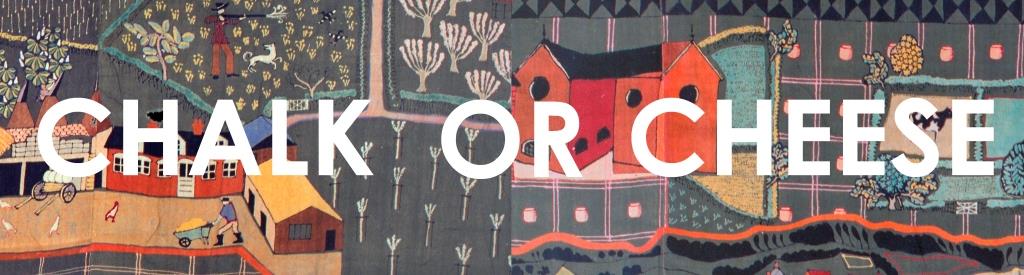
Chalk or cheese, Cheshire or Kent, which will it be? Follow our the #VoteCheshire and #VoteKent campaigns on twitter and you can even join us at a special Museums at Night event on 11th May to help you decide how to vote.
-
Tags