Biscuit recipe of the week: Threadneedle Street biscuits
-
Author
- Alison Hilton
-
Published Date
- May 28, 2014
In case you need biscuit-baking inspiration, we’ve been digging in our library and archives for examples of biscuit recipes you might not have come across before. Our Librarian has managed to find several interesting recipes in the rare books collection, such as Lemon biscuits and Drop biscuits from ‘The London Art of Cookery’ by John Farley (1792) RESERVE 641.5 FAR; Ccommon biscuits, from The Frugal Housewife by Susannah Carter (1795) RESERVE 641.5 CAR; and Threadneedle Street biscuits and Aunt Charlotte’s biscuits in ‘Modern Cookery for Private Families’ by Eliza Acton (1875) RESERVE 641.5942 BUR.
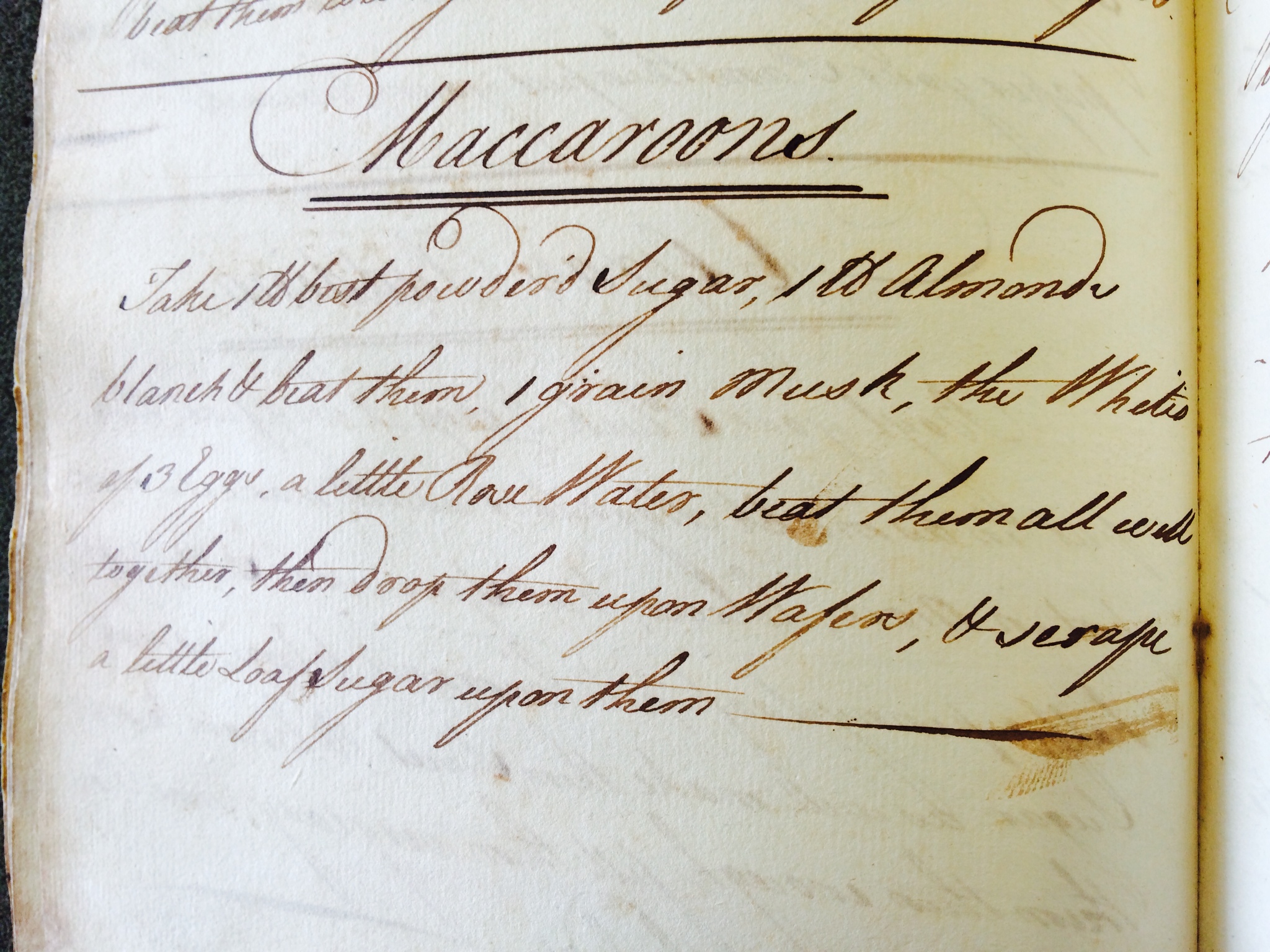
One of our volunteers also spent a morning in the reading room and found recipes in a handwritten recipe book with newspaper cuttings from the 1920s, a farm account book for a farm in Sutton Scotney, Hampshire, 1854-1865, which, as well as detailing quantities of crops sown and harvested, and account of livestock, was used as a copy book and recipe book, 1882- c.1913. She even came across a 100+ year old macaroon recipe to rival Picnic’s!
But the recipe which caught my attention was the Threadneedle Street Biscuits, simply because I was intrigued by the name. Threadneedle Street is the location in London of the Bank of England, but I haven’t managed to find out what the connection is! The recipe appears in ‘Modern Cookery for Private Families’ by Eliza Acton (1875), on a page with Plain dessert or Wine biscuits, Ginger biscuits and ‘Good Captain’s biscuits!
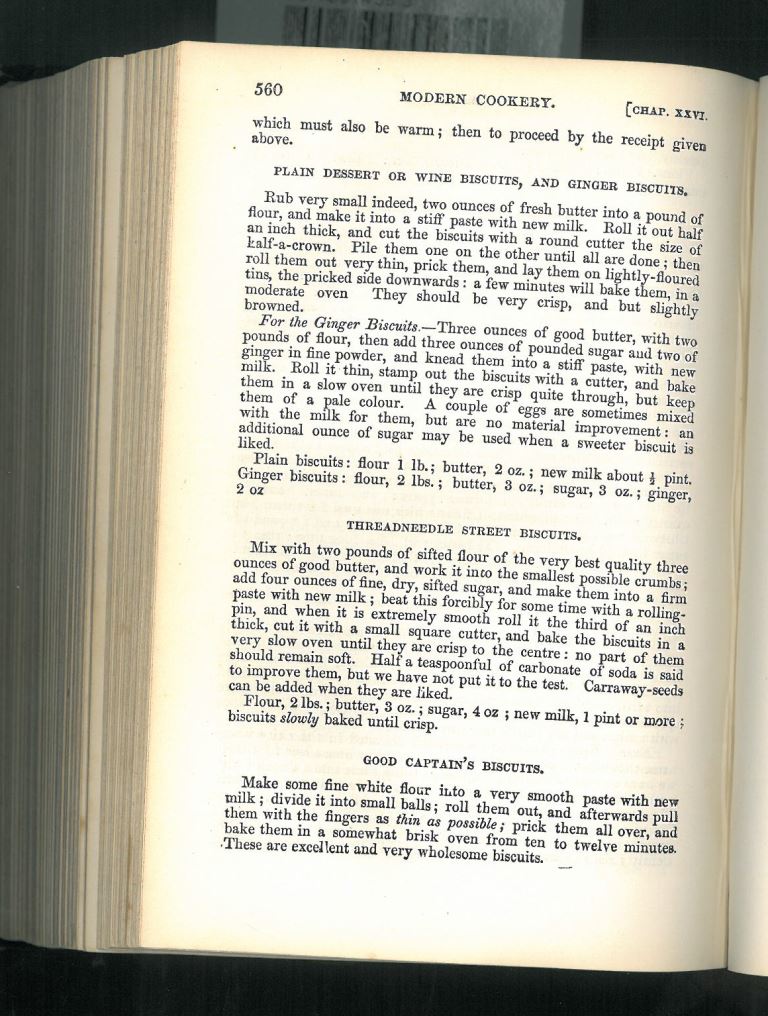
Threadneedle Street Biscuits
2 lbs flour 4 oz sugar
3 oz butter 1 pint milk
Optional: ½ teaspoon carbonate of soda ; caraway seeds
Mix with two pounds of sifted flour of the very best quality, three ounces of good butter, and work it into the smallest possible crumbs; add four ounces of fine, dry, sifted sugar, and make them into a firm paste with new milk; beat this forcibly for some with a rolling pin and when it is extremely smooth roll it the third of an inch thick, cut it with a small square cutter, and bake the biscuits in a very slow oven until they are crisp in the centre: no part of them should remain soft. Half a teaspoonful of carbonate of soda is said to improve the, but we have not put it to the test. Carraway seeds can be added when they are liked.
Give it a go and let us know what they’re like and don’t forget to bring your homemade biscuits to the Fete on Saturday and enter the Bake-off! For previous recipes, click here and if you’re interested in the other recipes mentioned above, come along to the Bake-off stand at the Fete to pick up a copy of our biscuit recipe compilation leaflet!