A stitch in time: Conservation of 1951 wall hangings begins
-
Author
- Alison Hilton
-
Published Date
- August 5, 2014
<<<<Written by Adam Koszary, Project Officer for Our Country Lives.
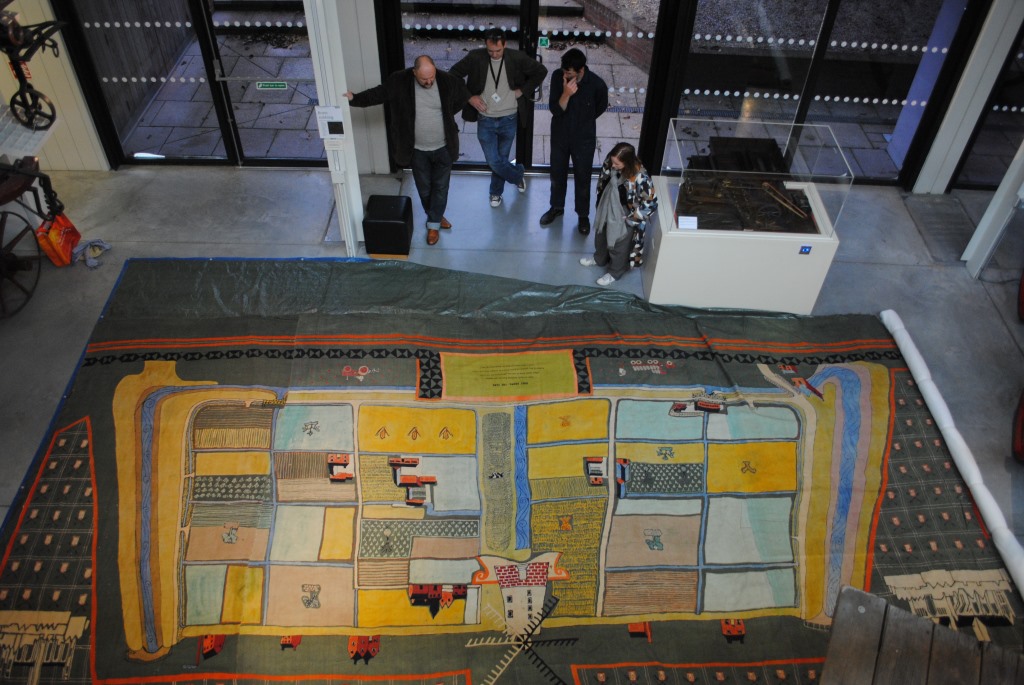
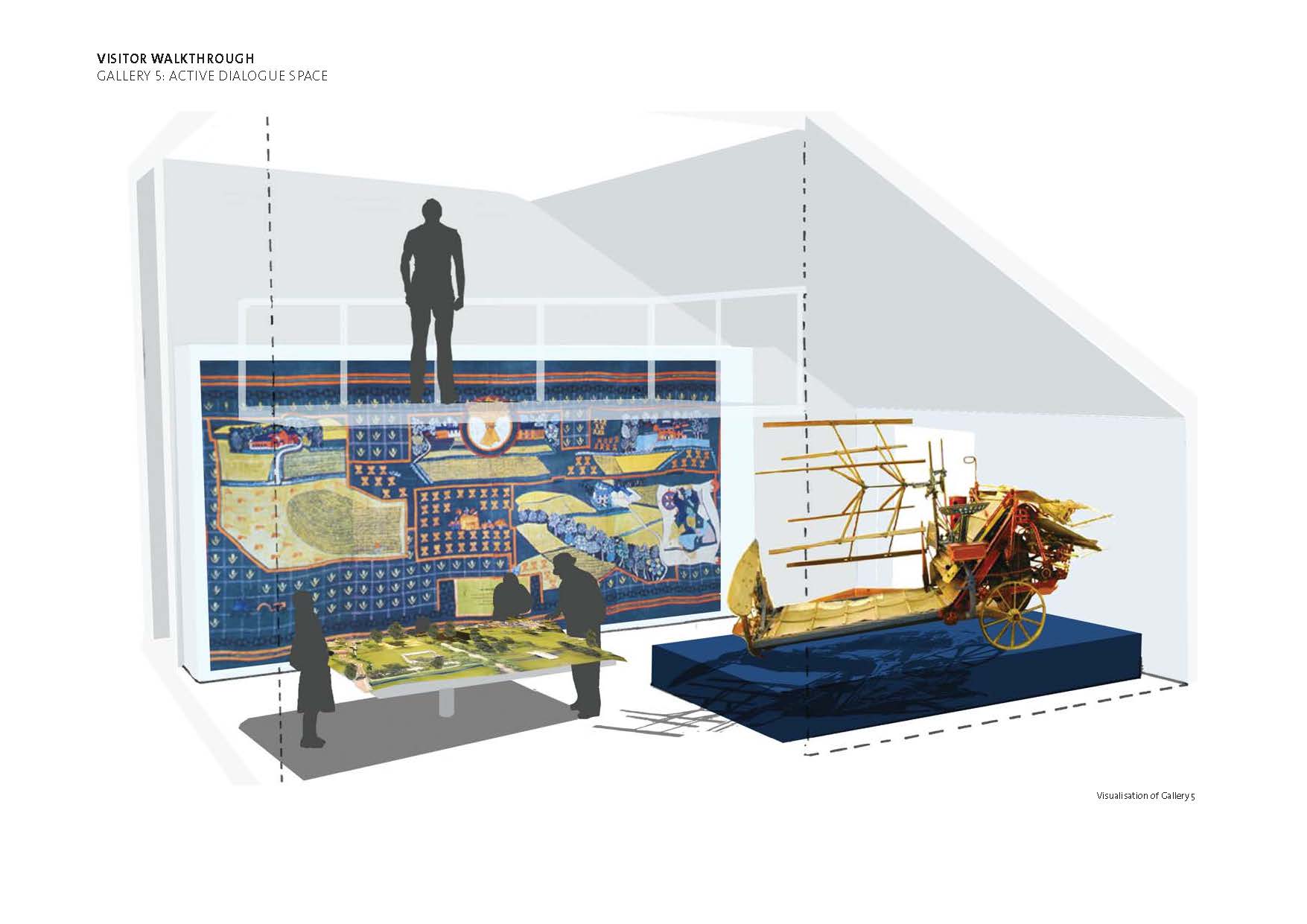
Today, a very exciting part of Our Country Lives began – in fact, it is almost the starting pistol to the project! Accredited conservator Kate Gill will begin conservation work on two of our Michael O’Connell wall hangings. These are huge, 7×3.5m pieces of textile art made for the 1951 Festival of Britain, and this work will allow us to put them on public display for the first time in around 62 years in our new extension. See this moving GIF to see its unveiling!
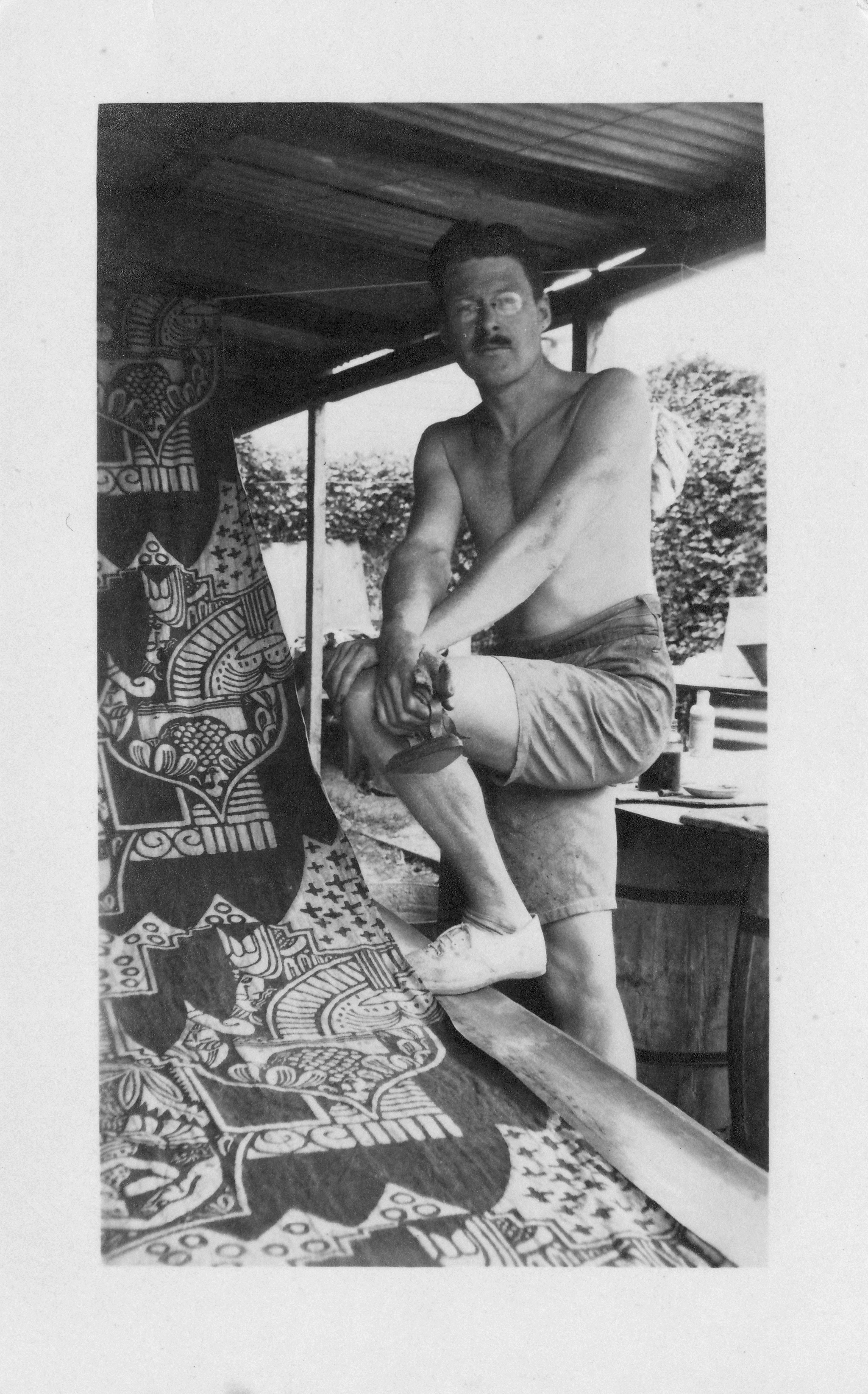
Their creator has been described as a ‘Lost Modernist’, a textile artist whose style and colour typify the 1950s and ‘60s, though at the time they were considered stylishly bold, brash and modern. Artistically, O’Connell found his feet in Melbourne, Australia where he honed his craft skills by building his own house in 1923, something he was forced into after a health inspector condemned his previous home, which consisted of a tent and bits of ragged furniture. His romantic lifestyle on the outskirts of Melbourne society, often journeying into the Australian bush to paint and draw, was a far cry from his upbringing in Dalton, Cumbria. His previous aim was to study Agriculture but his artistic talents were never in question: when held as a prisoner of war in WWI, one of his guards complimented his work and encouraged him to pursue a career in it.
It was also in Australia where O’Connell hit upon various pioneering methods of dying fabric with his wife, Ella Moody, both of whom were prominent in the Australian Arts & Craft Society. They returned to England in 1937 and developed a close working relationship with Heal’s of London, who proved instrumental after the Second World War in supplying fabric for the Festival of Britain wall hangings.
O’Connell’s commission required wall hangings to decorate the Country Pavilion at the Festival of Britain, held in May-September 1951. The Festival came after six painful years of recovery and rationing and was intended to celebrate British industry, science, art and people, but it was also thought that another great exhibition would help lift the spirits of the nation after the Second World War. It was intended to be a ‘Tonic to the Nation.’ For the hangings themselves, O’Connell had to reflect the versatility and variety of farming in Great Britain, and so he took a tour of the nation, reflecting what he saw and experienced in his art. The result are seven hangings covering most of Great Britain, representing the distinctive character of our regions and providing an artistic snapshot of the state of British farming in the early 1950s.
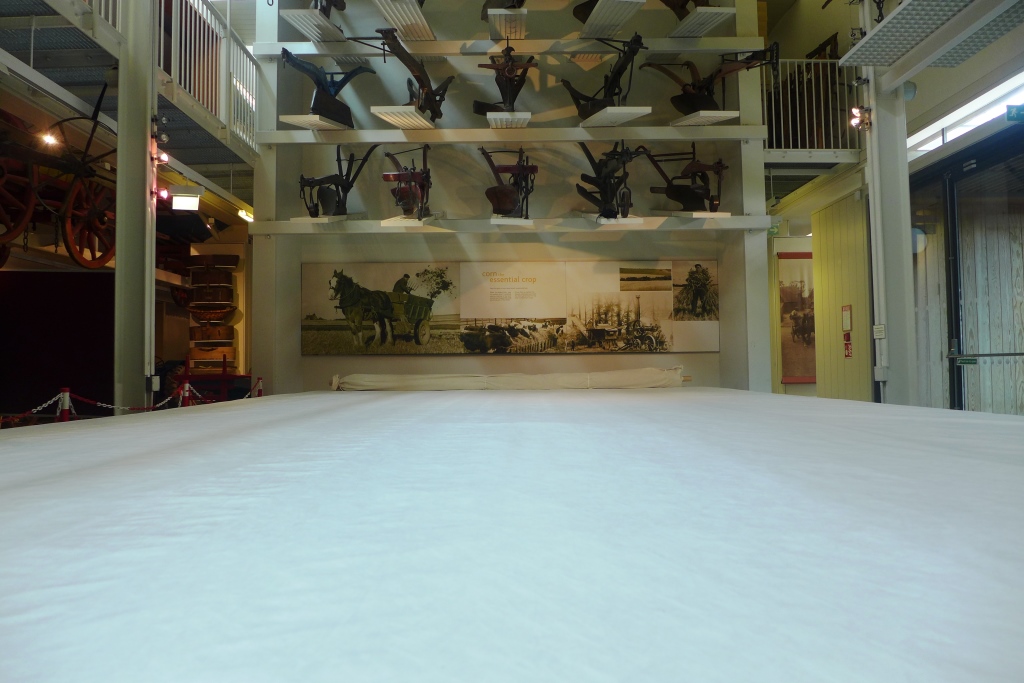
The two hangings which we are conserving cover Cheshire and Kent, which we believe show the breadth of the artist’s skill. Our contracted conservator, Kate Gill, will be removing creases in the fabric, as well as repairing damage, cleaning them and reshaping them in preparation for display. She will be working on the textiles in our large gallery which currently contains the Steam Engine, Threshing Machine and Farming Cycle, as this is the only space large enough to accommodate them in the Museum. You are of course welcome to come and have a look!
The hangings will be displayed in rotation for five years each in their own special case, housed in a new extension to our gallery as part of Our Country Lives. We are also having a bookable family session tomorrow throughout the day where you can make your own wall hanging using fabric, stitching, and your own imagination!
-
Tags