Our Country Lives project update: Activity planning
-
Author
- Alison Hilton
-
Published Date
- December 4, 2013
<Isabel Hughes, MERL Curator, updates us on the work on the ‘Activity Plan’ for our Heritage Lottery Fund project
Earlier in the year, the Cultural Consulting Network was appointed to help MERL produce an activity plan as part of the Round 2 submission to the Heritage Lottery Fund for Our Country Lives. The first section of an activity plan needs to address where an organisation is now. MERL has gathered information about its visitors periodically but in order to present a current, rounded view of things now, a programme of audience research was set up over the summer.
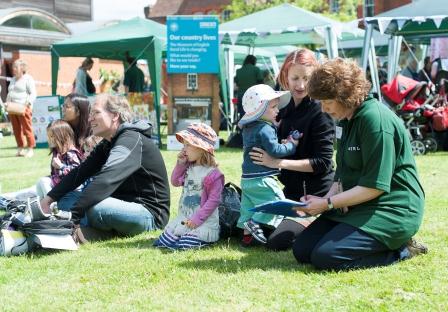
Visitors views on the current galleries and the events and activities offered by MERL were gathered by a team of volunteers, led by Volunteer Co-ordinator, Rob Davies. (Read his Volunteers Voice posts here) Views were also sought from the volunteers themselves, including their motivation for participating in activity for MERL and Special Collections. At a recent meeting Cultural Consulting Network reported back on the findings:
Our adult visitors are split 65% male, 35% female. A huge majority (91%) are local and come from very local postcodes or within a 30 minute drive time. Many are retired or middle aged. We receive some visits from international or domestic tourists but very few from people from a black and minority ethnic background. All our surveys flagged up a significant number of first time visitors but quite a view have visited several times and could be seen as ‘regulars’. Dwell time in the museum is relatively short and that includes our visiting our temporary exhibitions. MERL is increasingly popular with families, who again largely come from the local area or somewhere within a 30 minute drive time. A significant proportion of children coming to events regularly are under seven. We attract students to the Museum, particular those pursuing Museum Studies modules, 50% of whom are female, with a mix of ages achieved through a balance of mature students, most of them from a broad UK-wide catchment and very few foreign students. Amongst academics visiting there is a broad gender balance and a wider age range which includes some people with disabilities. Specialist groups come from further afield and are more or less mixed in age or gender, depending on the subject.
So far, so probably to be expected. The interesting point that Cultural Consulting Network have picked out relates to motivations for visiting. Our visitors tend to have a broad interest in museums and learning about rural history, but the number that connect this to an object-related experience is relatively low. At least half the visitors are looking for a good day out and to share their experience with others. A few were at the Museum as they were visiting friends and family. About 10% came from the Royal Berkshire Hospital over the road, often visiting family members who were sick. There was no expectation amongst visitors that they would see anything that would connect with their own personal history.
When talking to volunteers some similar patterns emerged. It was interesting that the percentages were reversed – more volunteers at MERL are female than male. They were motivated by the experience they had; working with skilled, friendly and helpful staff. However, they were not particularly motivated to volunteer because of the subject matter of the collections.
As a Designated museum with nationally important collections and boasting a really object-rich museum gallery, it is puzzling how visitors seem to be missing the connection with the objects. Cultural Consulting Network are advising that making the experience with objects more vital and relevant must be at the heart of the redevelopment. The challenge is to identify the stories that provide ‘a way in’ and make that object-rich environment more engaging. That is for the next stage in our planning…and we’d love to hear your ideas!
-
Tags