So we found a live bat in our galleries (again)
-
Author
- Joe
-
Published Date
- August 19, 2026
Long-time followers will know this isn’t our first bat rodeo. In December 2018, our volunteer Rose-Ann rescued a live bat from our rare books store. He was a rare Nathusius’ pipistrelle. We named him Merlin. The University even gave him a library card.
Fast-forward seven years, and it’s hot. Like, the 400th heatwave of 2026 hot. It’s also the end of our busiest day of the year, with hundreds of families at our summer event. Though we were preparing to close, the party was only getting started. Because it turned out a bat was flying around the galleries.
Museum worker pro tip: if you’d like to know if there’s a bat flying around your galleries, the best way is by simply listening to all the visitors saying: ‘there is a bat flying around the galleries’!
Having a bat in the galleries is a bit like the solar eclipse. It’s a rare experience that brings everyone together. Except rather than a colander or special glasses, you will need: a net, infinite patience, and extremely long arms.
That’s because a museum like ours has so many places for a bat to hide – from cool, dark corners, to narrow gaps, to old farm vehicles. This might sound like a bat’s idea of heaven, but the absence of food or water made it critical for us to rescue them as soon as we could.
The rescue
Rose-Ann, Merlin’s rescuer, still volunteers with us today. So we called her and, amazingly, she was with us within the hour to see if she could help.
Needless to say: few things are more fruitless than playing hide-and-seek in a museum with a bat. After an unsuccessful tour of the galleries, we had to call it a day – in the hope that the bat would be more forthcoming soon.
Bats excel at much more than hide and seek. They are extremely well-adapted. They’re the only mammal capable of true flight. They have a phenomenal immune system, disease resistance, and an incredible ability to self-repair. Torn wing membranes can regenerate in under three weeks!
Please note: if you ever see a bat in the daylight in the UK, that bat needs help! So, please look up your local bat helpline to find the best course of action.
The next morning, our Visitor Services team located the bat snoozing in our galleries. Museum fatigue gets us all in the end.
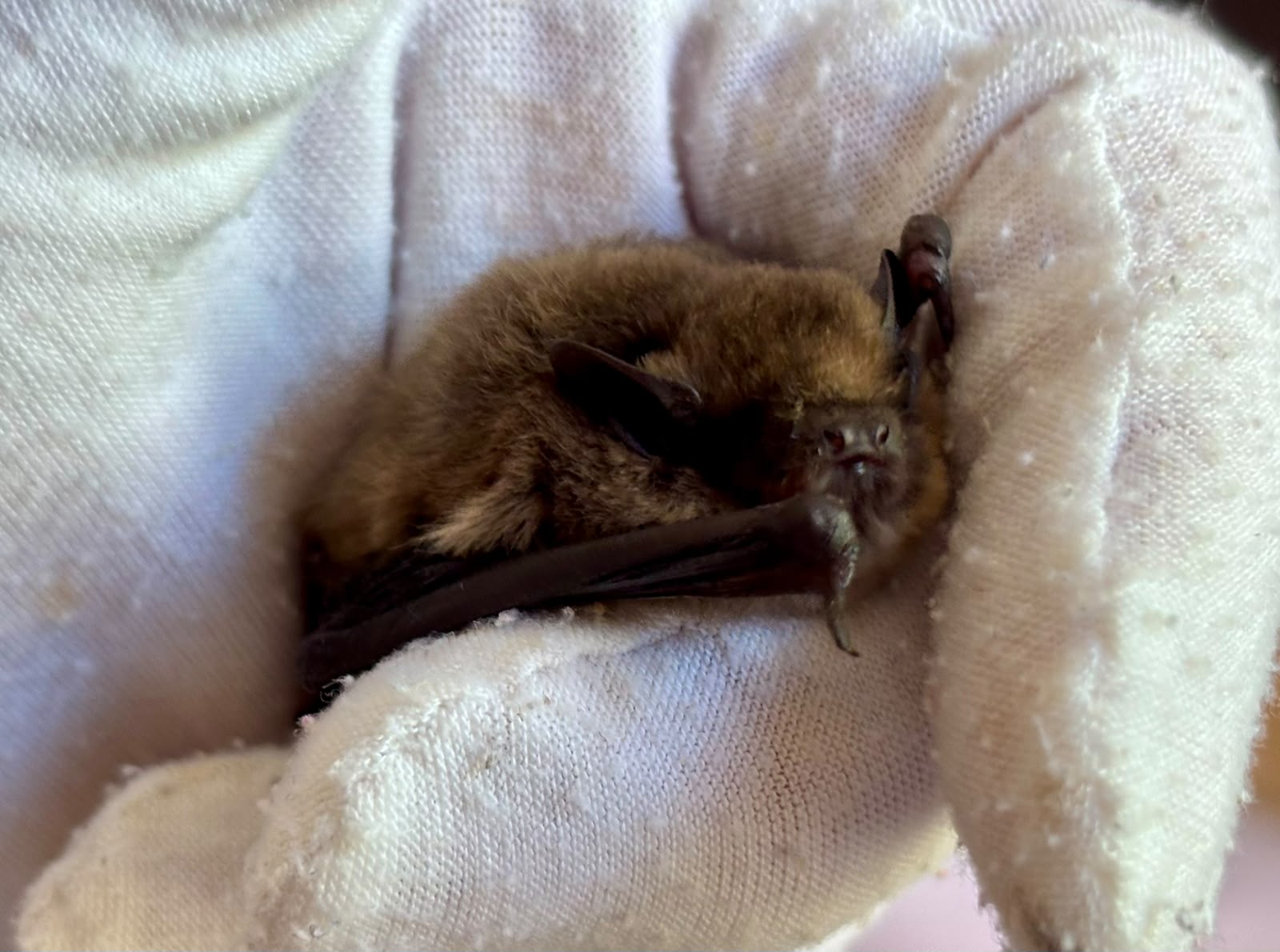
Rose-Ann returned, the sleepyhead was secured, and we named her Merle. She’s a girl!
The life of a bat
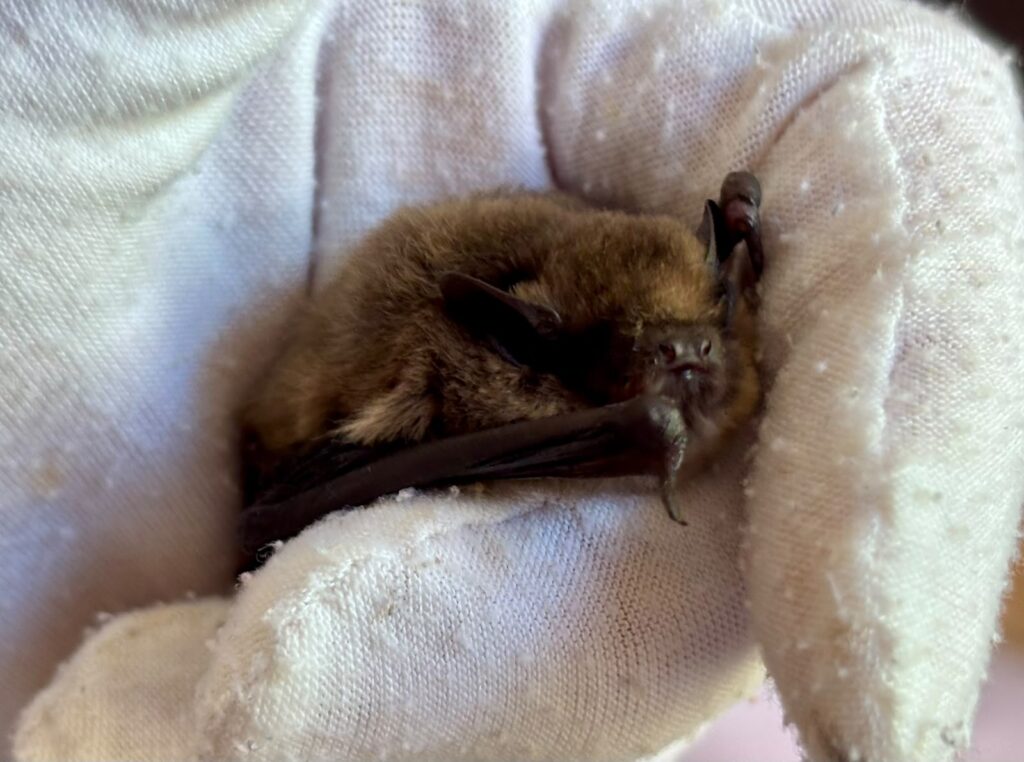
Merle is a soprano pipistrelle – named such because it echolocates at a higher frequency than the common pipistrelle. As pipistrelles give birth to their single pup in June, Merle would have been about 6-7 weeks old at the time of rescue. In bat maturity, this makes her a bat teenager.
Bats like Merle have a very low survival rate in the first year of their life. Up to 50% won’t make it through their first winter, due to predation, food shortages, or challenges of finding a safe place to hibernate. Yet the good news is that because they’re so well adapted, bats that survive their first year may live to be 10 or 12 years.
At the time of the rescue, Merle was very underweight and dehydrated. Rose-Ann, a registered bat rescuer, took her home to nurse Merle to health. This included access to a flight cage and an all-you-can-eat buffet of mealworms (though rest assured we won’t be stocking these in the café any time soon).
Releasing Merle
In the coming days, Rose-Ann will release Merle back into the wild by the museum. This will be familiar territory for her, so she’ll know where the safe roosts are, where to find food, and the rest of her colony.
It’s our hope that by rescuing Merle, we can give her another chance at a good life – to live 10 or 12 years, have pups, and find a place to roost. Bats stay local, so maybe she’ll even be back in our garden, in a future summer night.
Rose-Ann is registered with the Bat Conservation Trust – a national helpline of carers and rehabilitators who rescue bats. Their carers work across the country. Rose-Ann also leads Bat Rescue Berkshire, which supports bat health in our local area.
Thank you to Rose-Ann for helping us (and for giving guidance on this text), to Merle for her flying visit, and to all the people across the globe who care for bats.

-
Author
- Lottie
-
Published Date
- February 19, 2026
“I am the farm worker going home at evening”: gender fluidity, rural landscapes, and the Women’s Land Army
Library trainee Lottie Wood reflects on gender fluidity in the work of E. M. Barraud, and Barraud’s reflections on her time in the Women’s Land Army