“I am the farm worker going home at evening”: gender fluidity, rural landscapes, and the Women’s Land Army
-
Author
- Lottie
-
Published Date
- February 19, 2026
As part of my work as a library graduate trainee at The MERL, I’ve been cataloguing several donations of books relating to the Women’s Land Army. This was an organisation that emerged in response to wartime labour shortages on agricultural land, and brought many urban women into rural work.
Our Women’s Land Army classification number is home to a variety of genres. Children’s picture books sit next to historical accounts, alongside popular fiction imagining the sensational thrills and betrayals of life on the land.
Plenty of our collection plays upon the Land Army being viewed as something of a paradox. Titles like “When Grandma wore breeches” and “Corsets and Camouflage” tug at the seams of 1940s femininity, whilst signalling the incongruity that marked the land girl’s identity. In this way, “Land Girl” narratives assume an attitude that is often, as academic Pippa Marland describes, “plucky, comical, and self-deprecating”, characterising a newcomer’s feeling of being out of place in rural farm work.
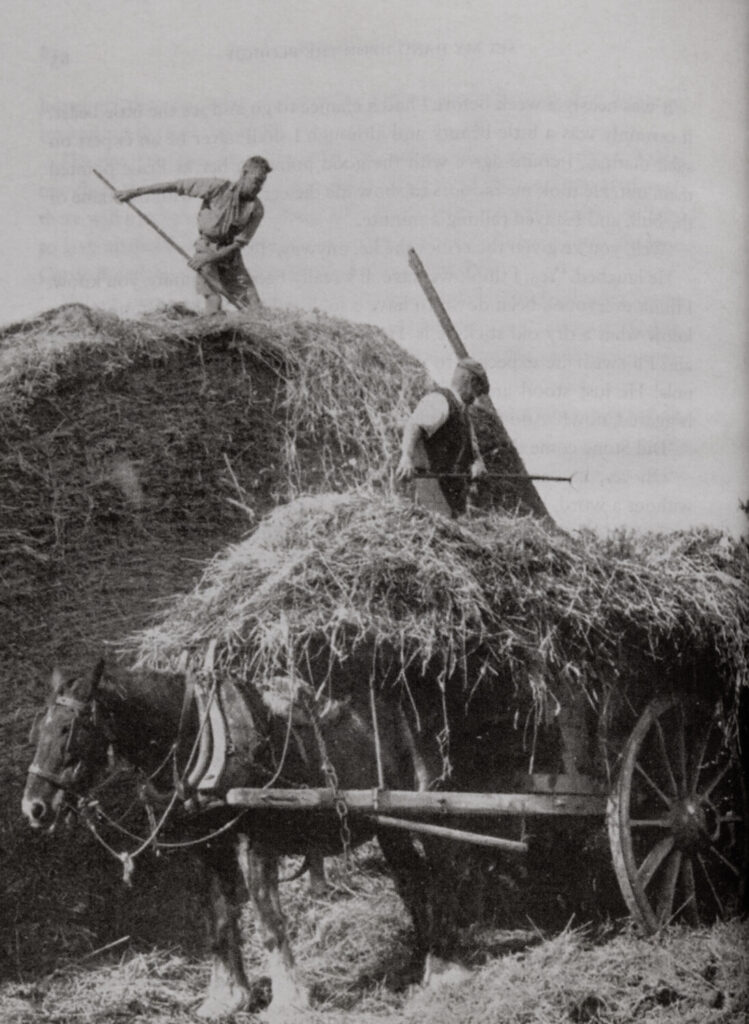
As I shelved donations, I came across Set My Hand Upon the Plough, a memoir of life in the Women’s Land Army by E. M. Barraud (Enid Mary, 1904-1972). Barraud had described herself in 1939 responses to the Mass-Observation project as “homosexual”, viewing personal style from “a masculine point of view” and being “mentally male, physically female”- choosing the same term “invert” that Radclyffe Hall had used in her 1928 landmark lesbian novel The Well of Loneliness.
Set My Hand Upon the Plough touches on concerns as vast as the educational disadvantages of rural children, the inadequacy of pastoral literature in representing agricultural life, and environmental anxieties relating to farmland management. Yet it largely forms a day-to-day account of Barraud’s comprehensive adaptation to life as a farm worker. One current that runs throughout the memoir is the notion that Barraud’s nonconforming identity does not conflict against her role in the ranks of the Women’s Land Army, but instead burgeons alongside the rural environment around her.
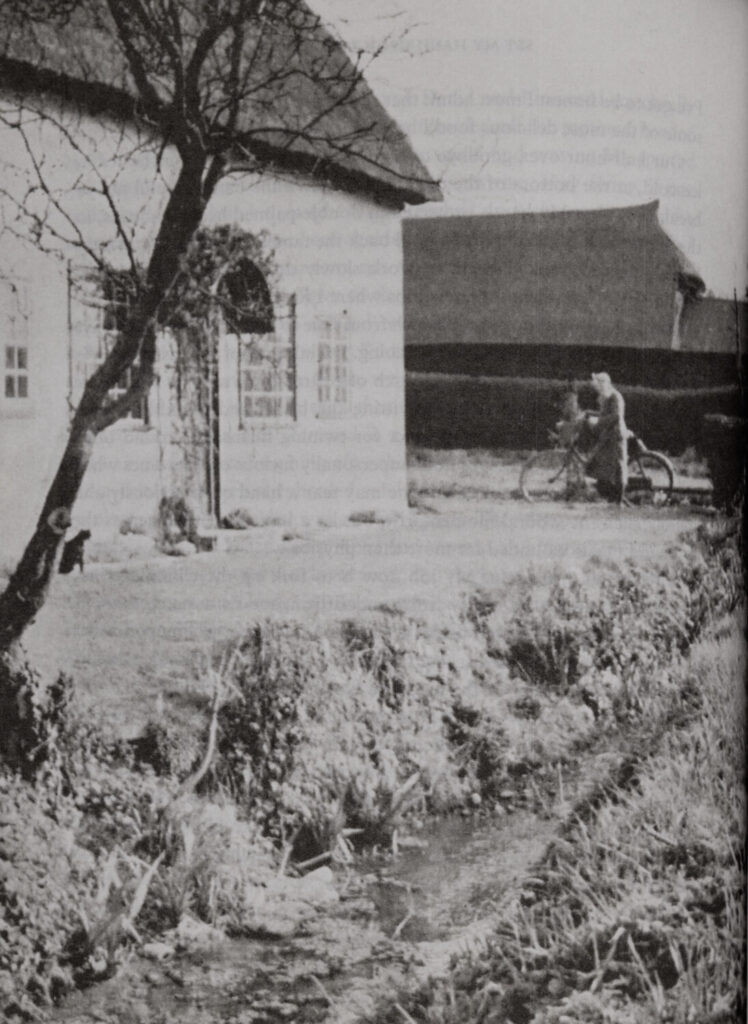
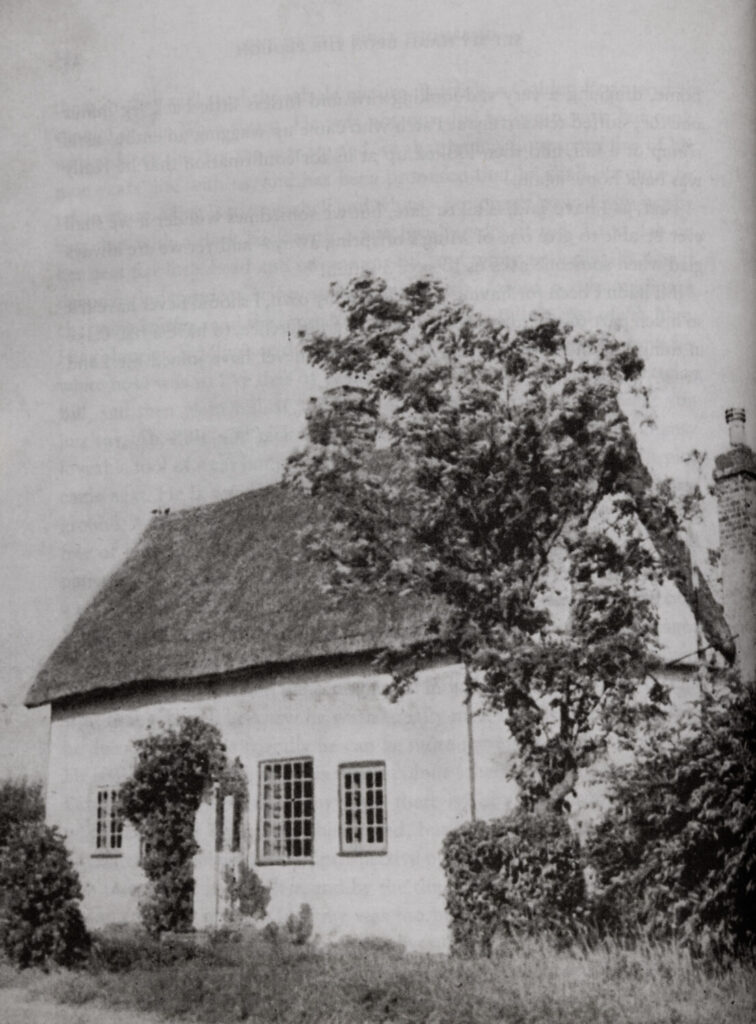
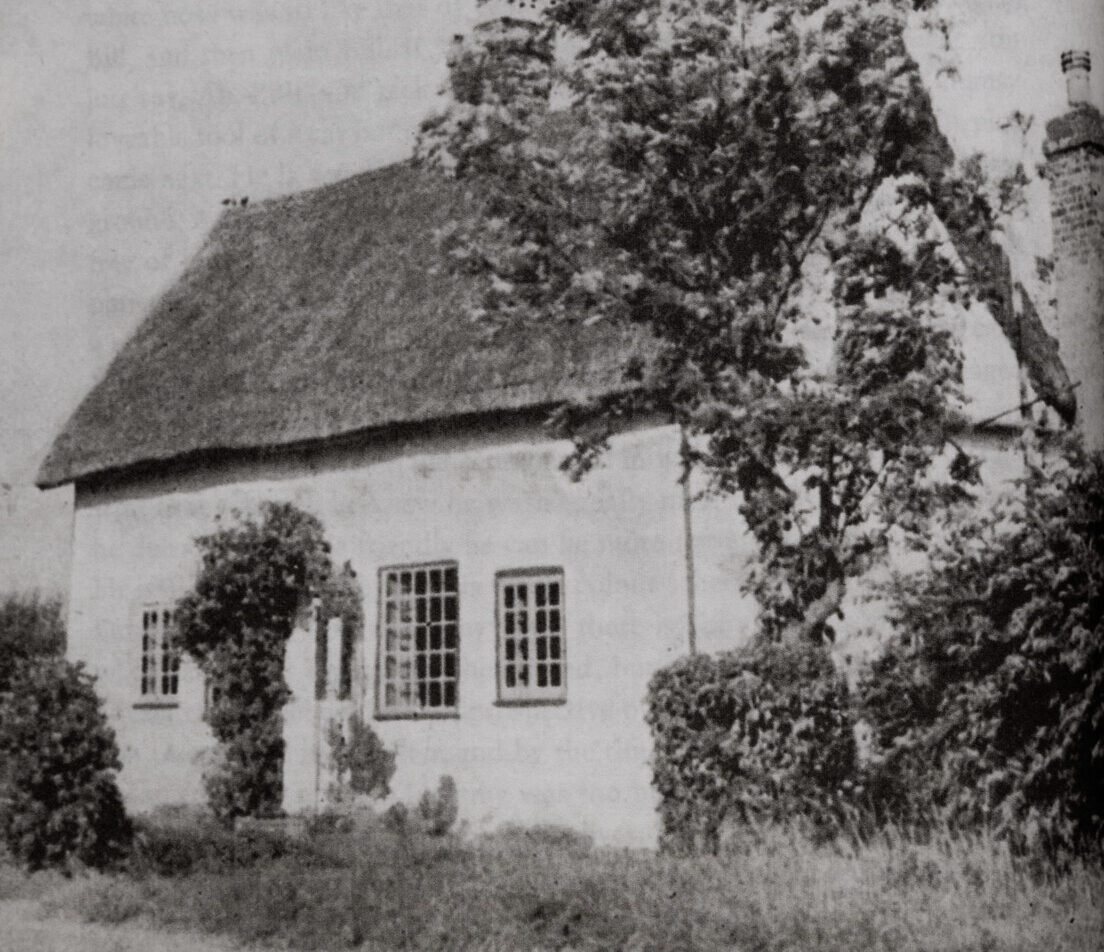
During and following her time in the Land Army, Barraud lived in her own cottage in Cambridgeshire with a woman referred to as ‘Bunty’, or ‘B’. She describes this relationship in Mass Observation diary entries as “technically single, but “married” in a permanent homosexual relationship with another woman.” In an earlier 1937 entry, ‘B’ had rejected the advances of a male companion with whom “there had usually been some sexual familiarity”, a shift in dynamics described by Barraud as “a bloodless victory to me”. Furthermore, Barraud’s preference for the name ‘John’ has been identified by Marland in the Little Eversden local history book, “Quiet Lanes & Orchard Ends”, and has been further confirmed by Jane Bower’s oral history work within the same village. Perhaps coincidentally, Radclyffe Hall also went by ‘John’ in her adult life. Barraud’s use of initials in her pen name further affords her a certain fluidity.
The memoir’s dedication verse, an excerpt of one of E.M. Barraud’s many poems, conveys a fluid understanding of the body:
My shadow is ten yards high;
I am as big as the Giant Cerne Abbas
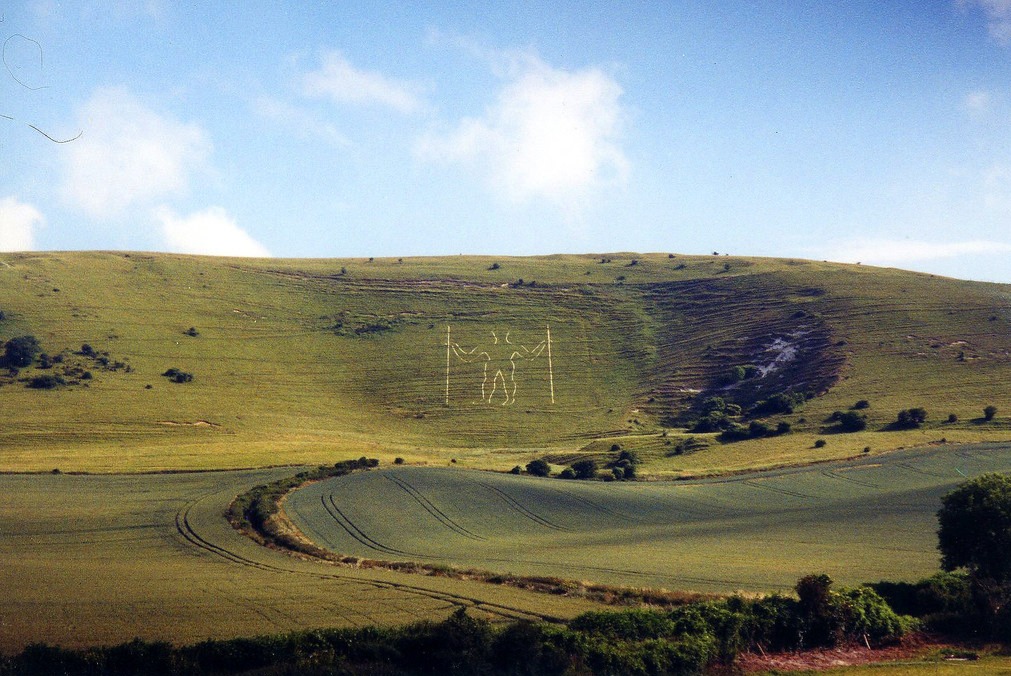
Or the Long Man of Wilimington.
I march astride golden shocks of cut corn
And between my thighs is all the fruitfulness of the earth.
I am the farm worker going home at evening.
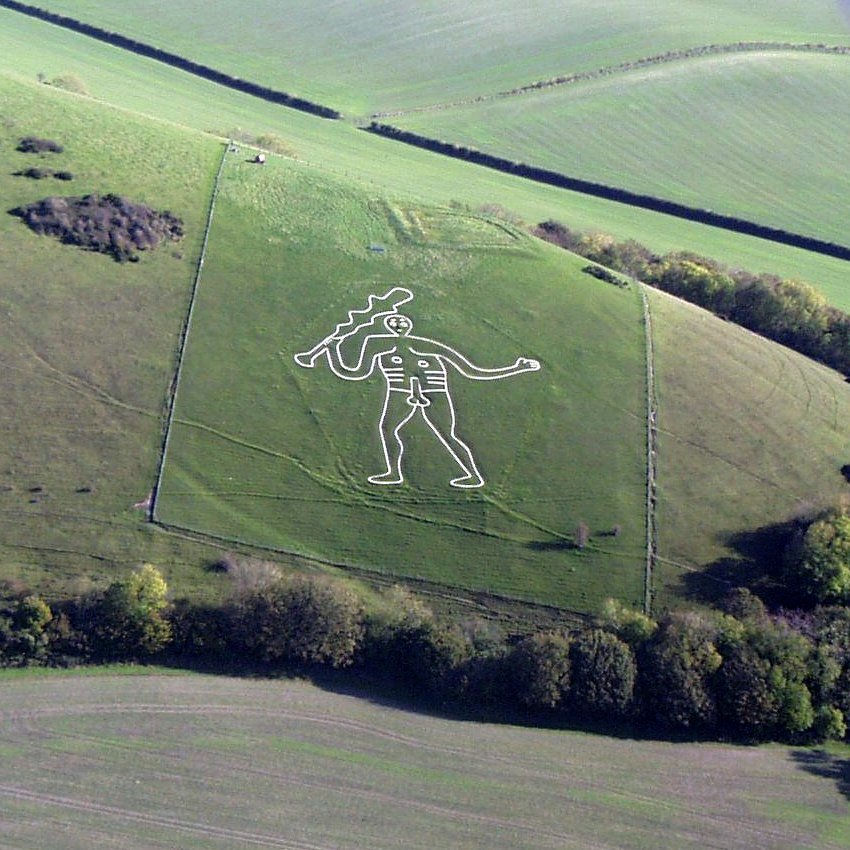
The narrator begins within imperial units (“ten yards high”), but her shadowed body seems to expand in all directions, (“astride”, “between”), to eventually encapsulate “all the fruitfulness of the earth”. The “Giant Cerne Abbas” and the “Long Man of Wilmington” refer to hill figures engraved in the hills of Sussex and Dorset respectively, originally created by cutting turf in the shape of male bodies to expose the white chalk underneath. Barraud’s shadow enlarges her frame to match the magnitude of these two figures, as she takes on the male virility they represent. A “distinctly non-binary or perhaps even hermaphrodite” (Marland) imagery is developed as she is positioned “astride” upright corn shocks, alongside the fertile image of “fruitfulness […] between my thighs”. Vita Sackville-West reviews this verse as “rare and admirable”, adding that it is “conceived on heroic lines”- a reference to its poetic form as much as its bravado. Barraud proudly proclaims her position as the ubiquitous “farm worker”, who returns from the day a heroic character of ambiguous gender, an expansion of both literary and gendered expectations. Just as these figures were inscribed into the surfaces of the hillside, Barraud begins the process of etching a place for herself within the rural landscape.
We often see a common narrative in which a nonconforming character’s move to an urban centre pre-empts self-discovery and acceptance. In opposition, the feeling of atypicality and inversion that Barraud reported in Mass-Observation from her position as a London office worker, seemingly fades after her move to rural life. In a striking moment of self-recognition, Barraud writes:
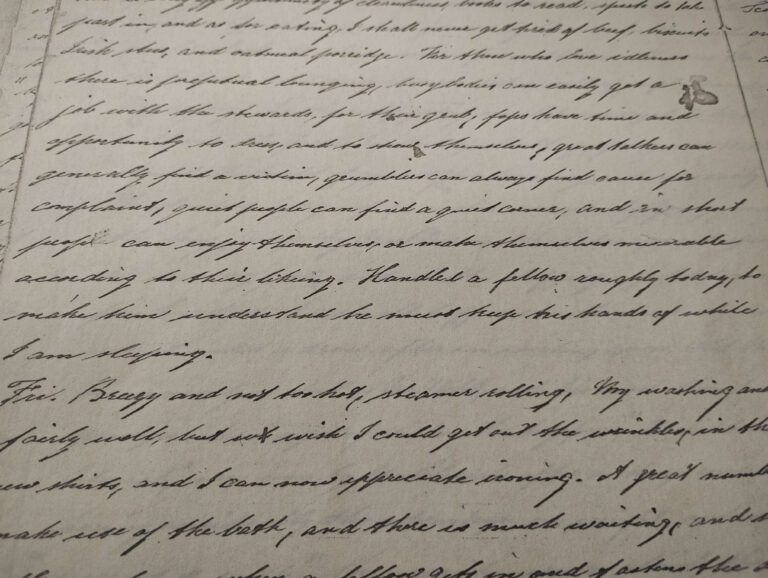
When I have time to look in the glass nowadays I see a figure that is two stone lighter, hair that the sun has bleached, arms that the same sun has tanned, hands rough and horny. Over my shoulder I see dimly the pale fuller face of the insurance clerk I was, and shall never be again because I know now that, having beaten my typewriter into a ploughshare for the duration, I shall never be able to face going back to town life.
Barraud’s integration into rural life entails a highly physical transformation, in which she barely recognises her former self as it peeks over her shoulder. The doubling motif suggested in the dedication verse (“my shadow”) recurs here, to reinforce the extent of the bodily change felt by Barraud. A description of physical strengthening is common in Land Army accounts, and Barraud links it to self-discovery when she writes that “every fresh job meant a fresh set of unused muscles to break in”, dreaming of the day that she can say, “now there isn’t another inch of me to discover”. Despite how intensive she reports her farm training to be, causing her to fumble at times, Barraud’s overall characterisation of the training process is not one of comical confusion, emphasising her alienation and oddness. It is rather a movement towards clarity, in which she learns to use new muscles, commands greater mastery over her own body, and approaches a feeling akin to rebirth, of self-unification.
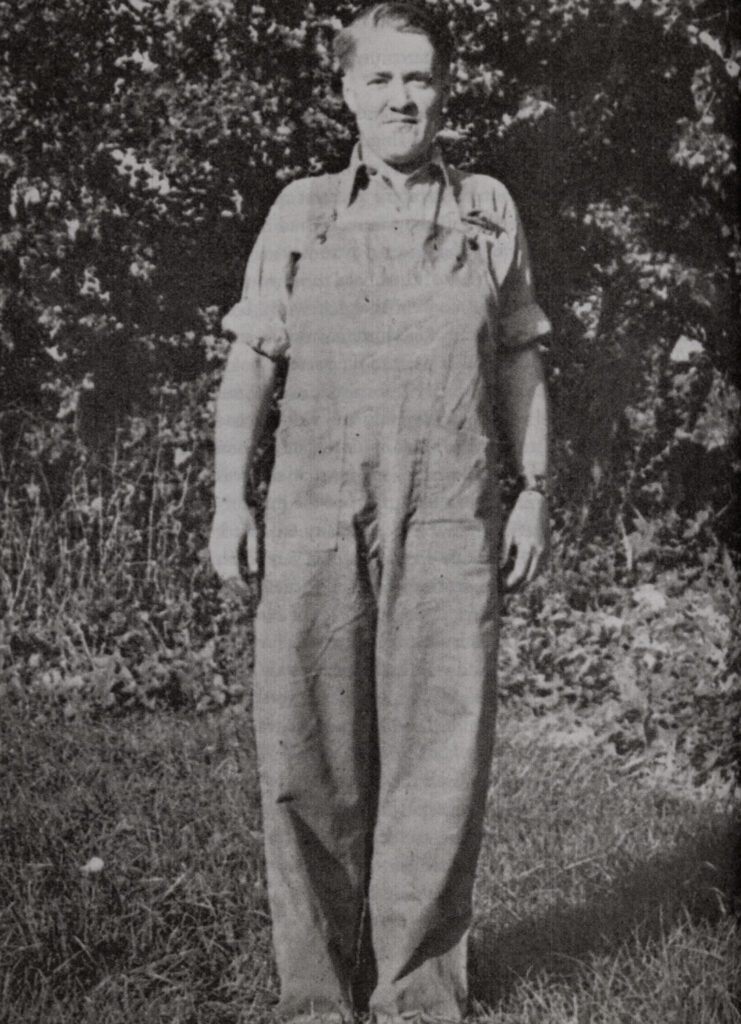
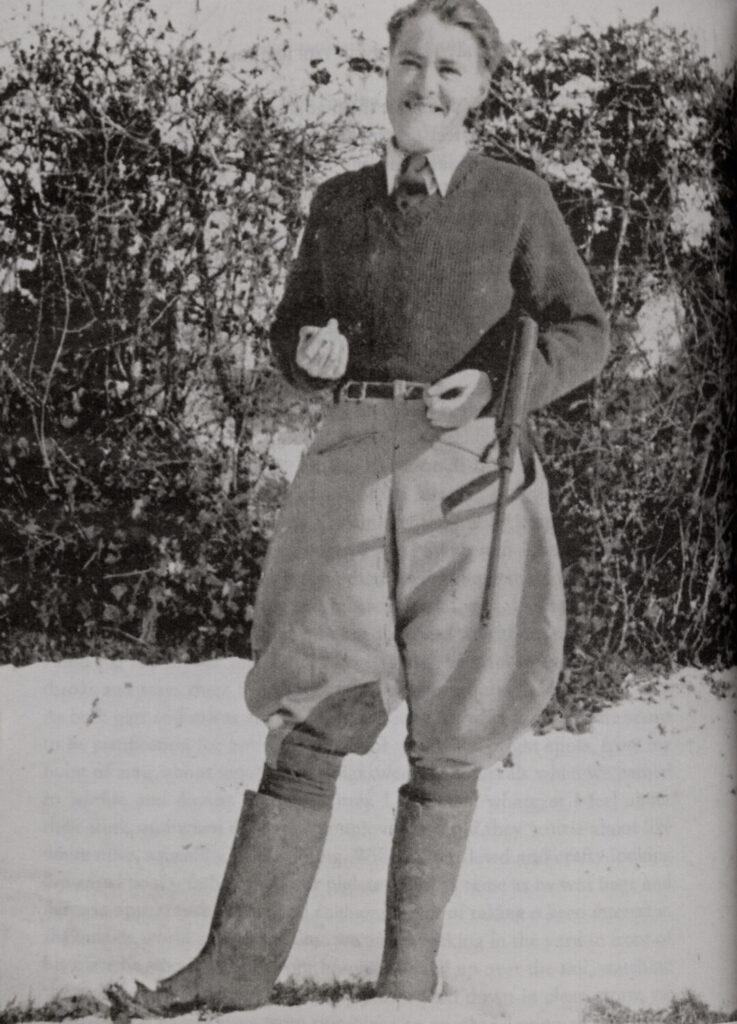
Author Luke Turner notices this change within the memoir’s two portraits of Barraud. The first is taken at the start of her farm training, as “she stands almost awkwardly […] her face scrunched up”. The second seems to be from years later, captioned “the professional feel of a gun under my arm”. Turner writes “she looks a different person, at ease and smiling […] voluminous trousers tucked into long songs and boots, shirt and tie under woollen jumper, hair marginally longer, but no less masculine and smart”. The physicality of the job, which Barraud fondly paints throughout the memoir, allows her to grow into a powerful body, and one that she can recognise in the mirror.
Barraud also uses this bodily metaphor as she describes starting to run the village library, a project that enabled her to “dig [her]self into this village”. She writes in “The Land Girl” (a monthly magazine produced by Women’s Land Army members) that getting to know the local community in this way resulted in many exchanges of garden vegetables, and shared evenings at the pub. For Barraud, this role “helped the moss to grow more quickly over the angular nakedness of my alien stone”, an image that fashions her as an extension of the natural landscape. Beginning as a jagged stone, with an ‘angular’ sense of otherness, and ‘naked’ vulnerability, herself and her body gradually become integrated as a mossy rock indistinguishable upon the rural scene. Rather than constituting an assimilation, this seems rather a growth into oneself, echoing Turner’s phrase: “in her exodus, E.M. Barraud grew from the soil of East Anglia an identity that transcended gender binaries”. The intimation throughout Barraud’s memoir and poetry that the very surfaces of rural terrain might hold within them the capacity for nonconformity and fluidity is a moving one.
Barraud felt more able to explore her inner life throughout her poetry, revealing amongst frustrations of concealment and secrecy, stolen moments of bliss: “snatching our kisses while life’s back is turned” (Challenge), or “you are my harvest home” (Harvest Home). Her output could be situated within a lesbian rural tradition recalling the likes of Sackville-West, Anne Lister, and Alice Walker, and goes further to explore notions of gender fluidity. Unlike Lister and Sackville-West, Barraud’s perspective becomes integrated within the fabric of the rural community, as opposed to presiding over it. While Sackville-West suggests the dedication verse of Barraud’s memoir “should find its place in many future anthologies”, it is questionable whether this wish is tangible today. Yet, as attention grows towards LGBTQ+ presences and all women’s history, I hope it’s a wish that can be borne out.
Notes
- According to Jane Bower’s oral history work, E.M. Barraud introduced herself with “call me John” but retained female pronouns. I have therefore followed this lead when discussing her, whilst recognising her non-conforming identity. Luke Turner has similarly suggested that “perhaps the greatest respect we can pay to those in the past is to see them as they were, or had to be, back then.”
- Prior to and during the war period, Barraud wrote for the Mass-Observation project. Established in 1937, the project collected diaristic responses from the British public about their daily lives. Thank you to researcher Tim Jerrome for his notes on Barraud’s Mass-Observation work. Some Mass-Observation diary quotations are also attributable to Luke Turner’s introduction to the memoir.
Books referenced from within our collections
- Set my hand upon the plough / E.M. Barraud. MERL LIBRARY–8225-BAR
- The land girl. MERL LIBRARY PER OPEN ACCESS–LAN/GIR
- Poems of the Land Army : an anthology of verse by members of the Women’s Land Army / with a foreword by V. Sackville-West. MERL LIBRARY PAMPHLET–8225-BOX 1/06
Works referenced
- Pippa Marland’s foundational work on Barraud: From typewriter to ploughshare: The Agricultural Writings of E. M. Barraud, Women’s Land Army, 1939–44. / Marland, Pippa. In: The Agricultural History Review, Vol. 71, No. 1, 05.06.2023, p. 87-107.
- Luke Turner’s wonderful introduction to the memoir: Set my hand upon the plough / E.M. Barraud. New edition / introduction by Luke Turner. Bridport: Little Toller Books.
Images reproduced by kind permission of David Lumsden.
Jane Bower’s oral history work on Barraud in Little Eversden will be culminating in a play: Performance dates for E.M. Barraud evening.