Explore Your Archive: Interview with our Photographic Assistant
-
Author
- Alison Hilton
-
Published Date
- November 20, 2015
Continuing her exploration of the world of archiving, Whitney talks to Photographic Assistant, Caroline Benson about her role.
1. What is your specific role within archiving and what aspects interest you the most?
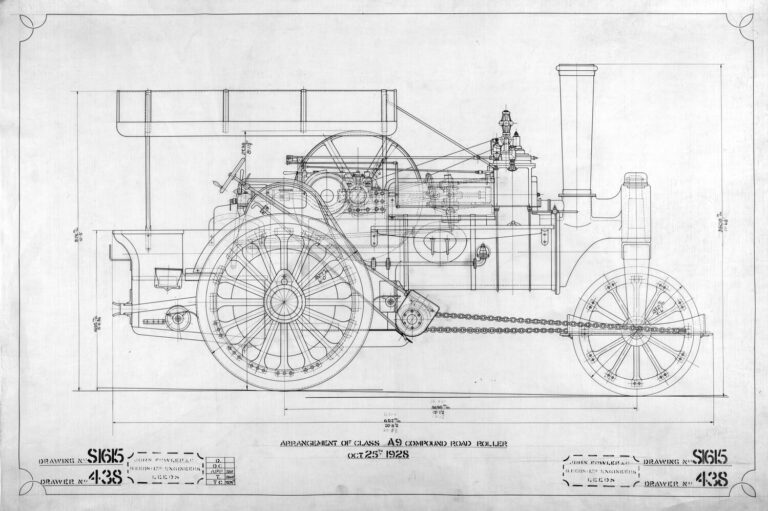
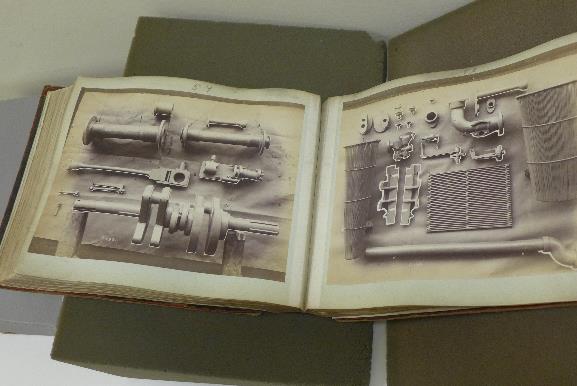
My role is Photographic Assistant and I deal with all the photographic inquiries and income generation. I licence images for use in books, magazines, TV use, & websites. I also deal with the engineering drawings & these are copied and sent out all over the world for steam enthusiasts working on their engines.
2. How has your role as a Photographic assistant evolved or changed because of the digital era and how have you adapted to that?
When we first started there were no images attached to the catalogue at all. People used to order a black and white print and we used to post them. Some people still want prints but they’re done digitally. We also used to send images on CDs or DVDs if they were going to published or put on websites but this is now often done through file transfer.

4. What changes do you think you will see in the field of archiving or more so specifically collecting and storing photographic images?
We’re into the realms of hoping we can get photographs digitally archived. That hasn’t happened yet but hopefully we will continue collecting in the future and that’s how we’ll receive them.
5. What skills do you need to do your job?
Time management is key, especially now with the digital age where people want things ‘now’. At the moment I’m the only one working with the photographs so I have to juggle what’s coming in and make sure I don’t neglect other projects.
6. Have you come across any photographs that have been memorable for a particular reason?
Every day there is something. They might not be superb photographically. It might just be a small print but it’s showing you something different and there are some wonderful collections.

7. What are you working on this week ?
I’m working on supplying images for a publication. The client has requested some photographs and posters so I’ve found those and they’re going to be copied. We’ll be licensing those images out to them.
8. What is the most rewarding aspect of your job?
I like taking inquiries in. I get asked some obscure questions about collections I haven’t dealt with before. It’s good to talk to them about what they want, refine the search and then suggest possible images to make their ideas work. I do a bit of research and hope the customer likes what I find. It’s really good if the pictures haven’t been used or promoted before and they decide to use them. Then when I see them in a book or on television it’s brilliant.
10. What is the most challenging aspect of your job?
I suppose it’s the pressure of time and getting things done when they need to be as I’ve often got other duties in the reading room. However there are always ways around it.
11. How has your job changed since the museum closed for redevelopment?
I’ve had some extra hours to work on the galleries and that’s been really interesting. There are going to be images in the museum that people haven’t seen before. I also worked on the old galleries, so it’s very interesting watching the process this time. It’s going to be different and I’m very excited about the material they are going to use.
 12. How do you preserve images and make sure they are good quality?
I think when digitisation first came onto the scene it was thought if you digitised something that was enough but we now know that’s not the case. You should also conserve the original material. We have glass plates from 1880’s which are perfect. You can get a superb digital image from scanning. The first volunteer project I was involved with was to preserve some glass print negatives. They were put in four flap enclosures and into archival boxes. We couldn’t have done that without the volunteers.
14. Does social media help or hinder you from doing your job?
It is a good thing knowing that our images are out there as we want people to know what we have. However there is a problem that once images are on websites people think they are free to use and they’re not. We try to generate income from the images so that is a concern.
15. Does MERL ever publish books on photographic images?
Yes, Jonathan Brown , John Creasey, Sadie Ward & Roy Brigden, amongst others, were members of staff using the photographs from here in their books.
Find out more about the MERL image library and how to access the photographic collections.
-
Tags