Volunteers' Voice #15: What is a community?
-
Author
- Alison Hilton
-
Published Date
- October 6, 2014

During the day we had a discussion about the idea of community and, more specifically, about what a community is. A community can mean and represent many things, from a community group to a community who all live on the same street. This notion of community got me thinking about our volunteers and how our diverse volunteer team are all part of a community, and indeed how UMASCS as a whole is a community.
Theoretical discussion aside, volunteers and community groups can often go hand in hand. I recruit volunteers through community groups, and even whole community groups often come in to volunteer on particular projects for us. When I was looking to widen our volunteer team to reflect the population of Reading, I looked first at local community groups and spoke to them. At first (although not always) they can be hard to contact or to convince them to be involved with your organisation, but once you have built that relationship it can be overwhelmingly productive and last for a long time.

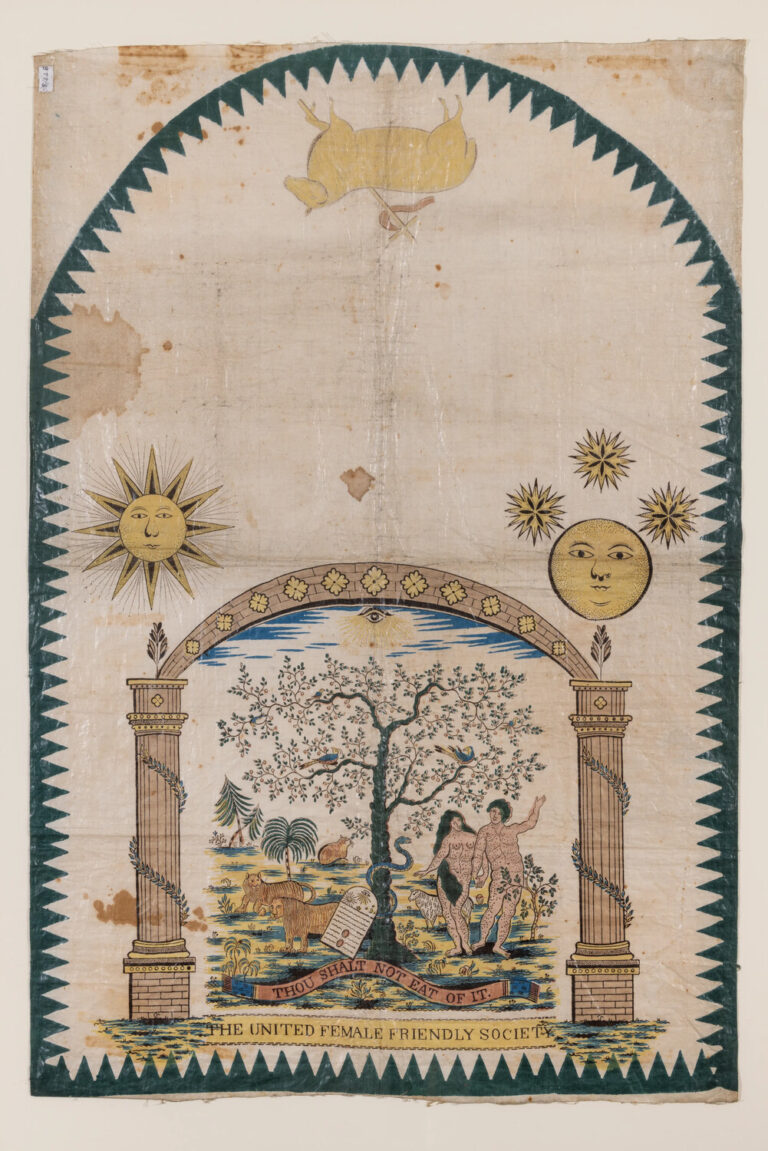
At the Museum of English Rural Life we recently worked with ‘Slough Roots.’ Originally, this group was interested in the Museum because of plant cultivation and the varied plants and herbs we have in our garden. We developed this relationship and soon found ourselves working with them on a quilting project, influenced by our extensive collection of fabrics and our large collection of sewing machines. Following on from this, we are about to embark upon another similar project inspired by our fabric collection. Another community group we work with is our local Women’s Institute; the W.I have played an active role in our previous Village Fetes and in the past supported an exhibition at MERL. I have a volunteer who speaks at W.I. meetings about MERL and our Special Collections, and in turn I have recruited many volunteers from the engagement we have them.
Community groups and volunteering can be synonymous and they are never far away from each other. If you work with volunteers you are going to work with your local community and community groups. It is worth keeping in mind, however, that a community can also be on a much larger scale and not just around the corner from you. For us, as a Museum with a national focus, our Director summed it up by stating: ‘The entirety of Rural England is our community.’
-
Tags