Volunteers' Voice #12: A tale of rural protest in Berkshire
-
Author
- Alison Hilton
-
Published Date
- May 27, 2014
<Written by Kaye Gough, Volunteer.
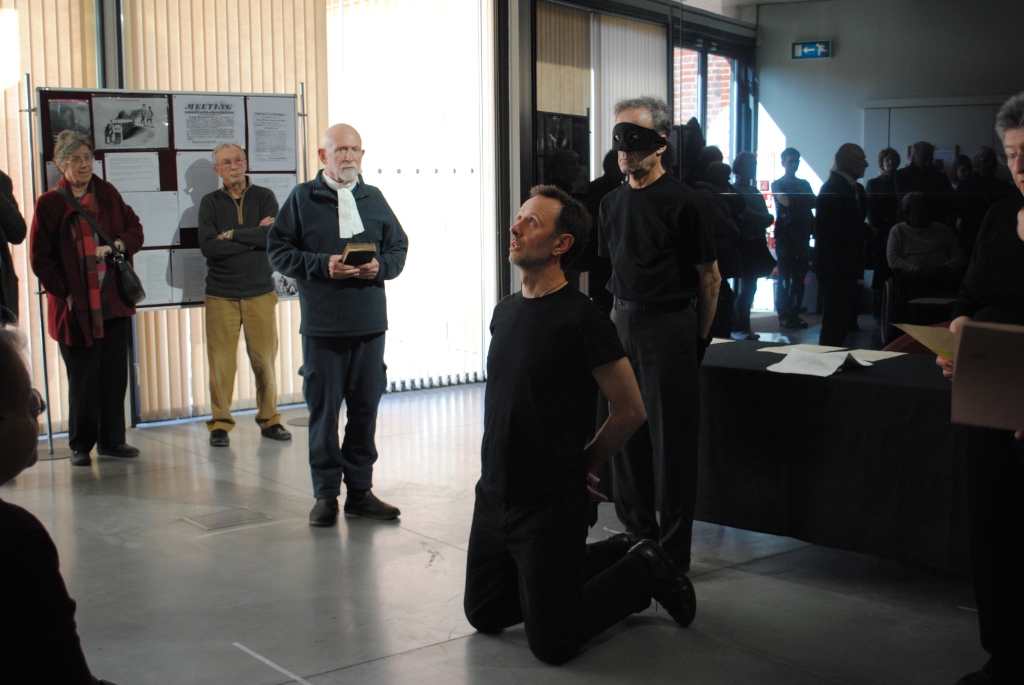
Well, we did it! After months of discussions and script conferences; research teams trawling through local archives; rehearsals, sourcing costumes and music, the MERL Players presented two performances of our tableau Performing Protest: Riots against technological change in the 19th Century to full houses at the Museum on Saturday 22nd March.
I have been researching the Swing riots since 2010 after talking to a Museum visitor who asked to see a threshing machine. She explained that her ancestor had been transported to Tasmania in 1831 after being brought before the Salisbury Magistrates and charged with destroying a threshing machine. My curiosity was aroused; history has always been a passion of mine and volunteering at MERL has given me the opportunity to pursue this hobby. I discovered that the Swing Riots, an important agricultural protest movement, appears as a minor footnote in our history and yet had a major effect on rural communities throughout the south of England, including Berkshire.
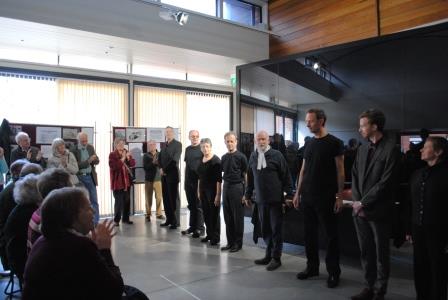
The ‘MERL Players Company’ formed after the CREW Presentation Skills course in 2012 developed various events designed for children from Family Tours to a Victorian Christmas. We created different characters to illustrate aspects of rural life and focused on local history relating to Huntley & Palmers and Victorian Christmas traditions. At the beginning of 2013 the Swing Riots was discussed as a potential subject to include in a planned outreach programme to present to senior school and community groups. We were fortunate to have experts on the subject in Rob Davies, our Volunteer Supervisor and Keith Jerrome, a fellow volunteer guide to lead us on our Swing Riots journey.
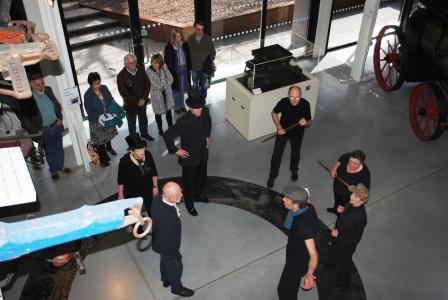
Everyone jumped into action to relate the story of William Winterbourne (alias Smith), who was hung at Reading Gaol, and the protest activities within the communities of Kintbury and Hungerford. Keith and his team carried out important background research at Berkshire Records Office; we read books on the subject; Anne discovered a folk song on the Swing riots (Owlesbury Lads). Ilka Weiss, a stage designer with international theatrical experience gave us valuable advice during rehearsals which helped us finesse our performance. Costumes were kept simple, with everyone wearing black with hats, shawls and caps for identifying characters. Jan Butler, another MERL Volunteer, did an outstanding job creating and knitting superb wigs for the judge and two barristers – all from an old Arran sweater! Clive became a powerful Winterbourn, Keith relished his role as the Reverend Fowle and Jeremy a commanding Judge. Sadly, we had cast members fall ill at the last moment – but in true theatrical tradition ‘the show must go on’ and ‘understudies’ stepped in.
It has been great fun and now the show goes on tour at the end of the month! We are delighted to have been invited to present our performance to The Hungerford Historical Association on the evening of 28th May in Hungerford Town Hall – who knows, the next stop may be the West End!! Seriously, we welcome invitations to showcase this important story in classrooms, village halls or care homes!! Bring it on!!!
-
Tags
-
Author
- lottiewood
-
Published Date
- February 19, 2026
“I am the farm worker going home at evening”: gender fluidity, rural landscapes, and the Women’s Land Army
Library trainee Lottie Wood reflects on gender fluidity in the work of E. M. Barraud, and Barraud’s reflections on her time in the Women’s Land Army