MERL project news #1 – Hugh Sinclair papers now available
-
Author
- Alison Hilton
-
Published Date
- May 9, 2013
<<<written by Hayley Whiting, Hugh Sinclair Project Archivist
The papers of Dr Hugh Macdonald Sinclair DM, DSc, FRCP (1910-90) are now available at MERL. This marks the end of nearly five years of work by me, the Hugh Sinclair Project Archivist. It has been a very interesting, challenging, and rewarding project funded by the Hugh Sinclair Trust at the University of Reading and I’m going to give an overview of the archive and the work I have done.
First a quick look at the career of Dr Sinclair, as many of you will not have heard of him but may have benefited from his ideas. Dr Sinclair was an academic and pioneer in human nutrition who is best known for his theories on Essential Fatty Acids (EFAs), pioneering the link between Omegas 3 and 6 and human health. In 1979 he took this idea to extremes and undertook his “Eskimo Diet Experiment”. Dr Sinclair consumed only seal meat and fish for 100 days and tested his blood clotting times each day. This was not funded as the ethics committees consulted were not convinced this self-experimentation was a good idea! Dr Sinclair even had seal meat cooked for him at Magdalen College, Oxford, where he was a fellow, which was not popular with the other diners.
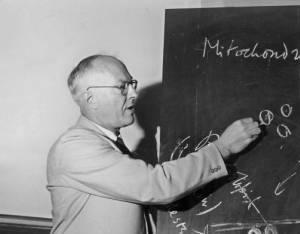
The Hugh Sinclair Archive covers this work on EFAs as and all areas of his life and career. The most significant part of the collection are the papers of the Oxford Nutrition Survey. Sinclair was asked by the government to set up the survey which worked throughout the Second World War carrying out nutrition surveys on many different groups for the Government to ensure the health of the nation. This work was also carried out in Germany and the Netherlands after the war and was vital in assisting the starving people there.

After his time at Oxford Sinclair set up the International Institute of Human Nutrition at his home in Sutton Courtenay and spent the rest of his life trying to raise funds for what he saw as a key research institute for the study of nutrition. The IHN never became what he had hoped for but research continued there until the early 1990s. As I mentioned earlier, Dr Sinclair was a fellow at Magdalen College and taught many students there. He is also remembered by staff and students at the University of Reading where he was a visiting fellow during the 1970s and 80s.
Dr Sinclair’s career never fulfilled its potential and when he wrote about his theories on EFA’s he was often ridiculed. However, towards the end of his life, he began to receive the recognition he deserved and many conferences were held in his honour.
After that whistle-stop tour of Sinclair’s career let me briefly outline the work I have done on the archive, In 2008 I began work on this project and was presented with over 1100 office storage boxes of papers with no list or real sense of what they might contain. So began the long process of going through every box and writing a list of their contents. Every day would bring a new surprise and my favourites have to be a large plastic mackerel, photographs of Dr Sinclair’s time overseas in the 1940s and a diary kept by Sinclair’s mother detailing his first few years with all the baby and toddler milestones described. My least favourite would be envelopes of hair and a half-full container of 30 year old mackerel oil!
Once the listing was completed I moved on to cataloguing material identified for permanent preservation and disposing of the rest. There were boxes of material to return to originating institutions such as Magdalen College and the Worshipful Society of Apothecaries, and a great deal of routine material as Dr Sinclair was quite a hoarder. Now this work is done the papers are catalogued and stored in archivally sound folders and boxes.
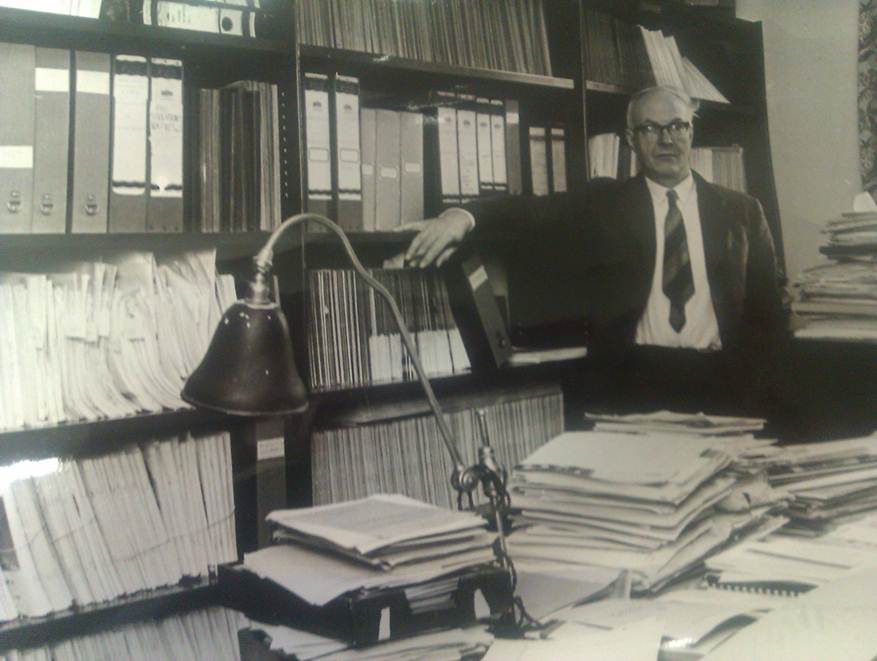
It is rewarding to know that these papers are finally available and I’m excited to see what research will be done using them.
Professor Ian Rowland, Head of the Hugh Sinclair Unit of Human Nutrition at the University of Reading, said: “The archive of Dr Sinclair is potentially an extremely valuable, untapped source of data for researchers in the field of nutrition. The ONS surveys were of contemporary importance in ensuring adequate nutrition of the population, but may be of equal significance in the present day.”
The papers can be viewed in the reading room at MERL. Please note that restrictions may apply to some records. The full catalogue can be found on the University’s online catalogue Select the ‘Archives – Museum of English Rural Life’ box and search for the catalogue reference D HS.
All enquiries relating to the papers should be sent to merl@reading.ac.uk or visit our website for details of visiting the reading room
-
Author
- lottiewood
-
Published Date
- February 19, 2026
“I am the farm worker going home at evening”: gender fluidity, rural landscapes, and the Women’s Land Army
Library trainee Lottie Wood reflects on gender fluidity in the work of E. M. Barraud, and Barraud’s reflections on her time in the Women’s Land Army