Focus on Collections: Dragons
-
Author
- Alison Hilton
-
Published Date
- April 23, 2015
To celebrate St George’s Day we decided to delve into the object collection for dragons.
 Dragons are normally something you would keep well away from Museum stores. Messy eaters, far too large and prone to setting things on fire, they are possibly the least ideal animal to have in a storehouse full of dry baskets, wooden tools and straw samples.
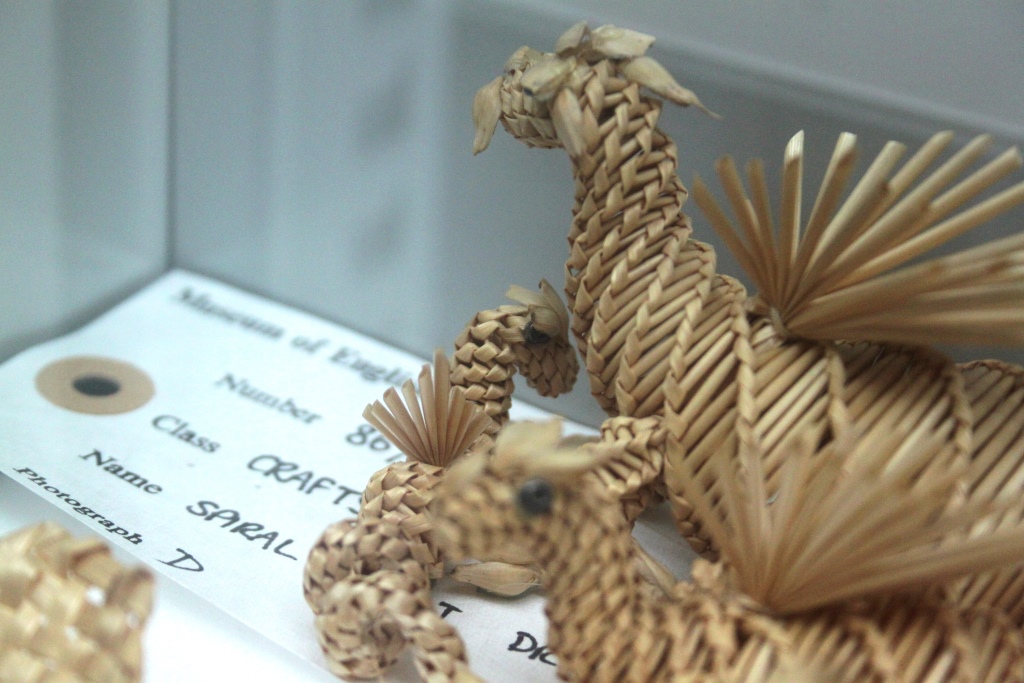
And yet, some curator long ago saw fit to let at least a few dragons in. Our first three are fairly manageable, being altogether about ten centimetres long, made of corn and being – on closer inspection – actually quite cute. Modelled on the fierce beasts of mythology, these corn dolly dragons made by Doris Johnson appear to be aquatic rather than airborne, with only two legs, a spiral tail and no real wings to speak of.
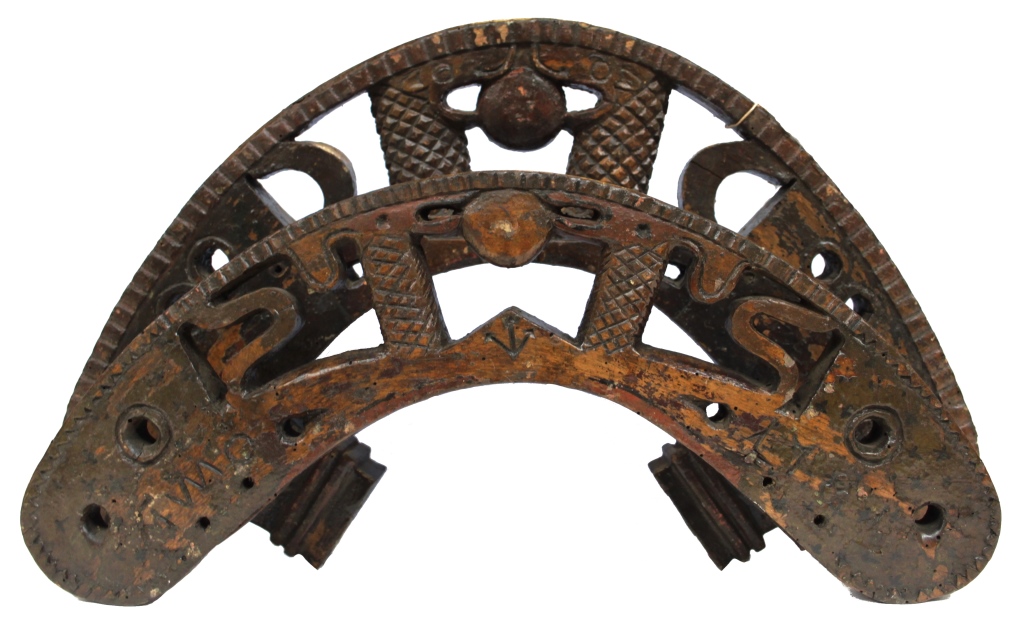
Our next dragons are similarly flammable but, since they were made in 1787, have managed to survive. They are known as Housen, and are pieces of decoration meant to be attached to a horse’s collar. They both depict a pair of dragons in the centre, mouths set against a globe. The style of both pieces is very reminiscent of Nordic designs, and yet these two pieces were collected from Twyford. Their origin is obscure, but they may have developed from the guard attached to the front of the saddle to protect the groins of a knight in armour, which at least gives them a flavour of St George.
The lack of wings, however, make us wonder if these even do depict dragons. Are they in fact heavily stylised lions?

-
Tags
-
Author
- lottiewood
-
Published Date
- February 19, 2026
“I am the farm worker going home at evening”: gender fluidity, rural landscapes, and the Women’s Land Army
Library trainee Lottie Wood reflects on gender fluidity in the work of E. M. Barraud, and Barraud’s reflections on her time in the Women’s Land Army