Focus on Collections #5: The Miller's Wagon
-
Author
- Alison Hilton
-
Published Date
- March 12, 2014
<<written by Katie Wise, 1st year Art History student and MERL volunteer.
Many people see the purpose of museums as educating through the display of historical objects. Whilst museums hold many other roles, one major part of any museum is research, as each object and exhibit has a rich history. It is beneficial for the museum, and also interesting and fun for the researcher to discover a bit more about this history. As a volunteer at the Museum of English Rural Life, I was lucky enough to be tasked with finding out as much information as I could about a miller’s wagon in the collection. I started volunteering at this museum as I am studying art history and want a career working in the museum sector, and one of the best ways to learn how museums work is through volunteering.
My prior knowledge of this wagon was that it intrigued most visitors due to the decorative star symbol that looks very similar to a Star of David but it terms of finding out more information, I didn’t really know where to start. But, in the words of Albert Einstein, “If we knew what we were doing, it wouldn’t be research.”
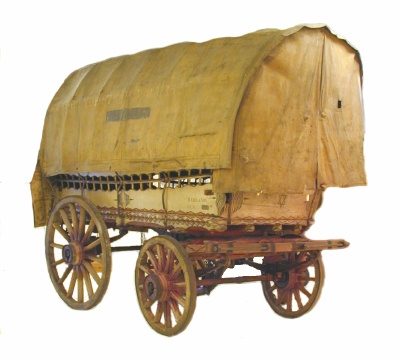
I started by looking at the information already collected about the wagon. By looking through the Museum’s description of the wagon on their database, I already had lots of factual information and a detailed description of its appearance and condition. The wagon is definitely one of the more impressive objects in the museum, as it towers above the visitors with its four huge wheels and space enough for two large horses, which it required for the heaviness of its load. The canvas cover is painted with the words ‘B. Cole and Son, the Hyde Steam Roller Mills’ which tells us the name of the miller and the mill it was used at. The blacked out word ‘Luton’ on the side not only shows it was part of the anti-invasion tactics during the First World War, but also shows us where it was made and used. Through looking at the acquisition documents, I had the name of the donor which I could then work backwards from to find out more details about his father, who had owned this wagon.
By using ancestry.com, I was able to discover more information about the miller and his family who owned this wagon. Starting with the miller’s name, Benjamin Cole, and the rough dates of when the wagon was used, I found census records which gave the names, ages, occupation and location of the Benjamin Cole between the ages of 7 and 67. Using these records I could build up a rough timeline of his life and have a more accurate idea of when he moved to different mills. As the wagon had been used at a place called Codicote Mill and then later at Hyde Mill, I could narrow the dates of its acquisition by the family to between 1861 and 1901.
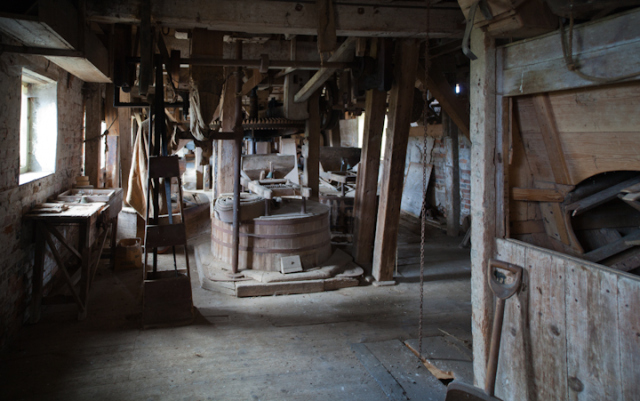
Researching isn’t always as easy as scouring the internet though. Through links with other archives, such as the Mills Archive in Reading, I was informed about a report that had already been written about the Hyde Mill and its owner but getting in contact and receiving this report proved fairly difficult. As I couldn’t find out any information about the company that made the wagon, I hit a dead end. It’s easier to find dates, facts and records about people than why an object was decorated in a certain way or lists of every wagon a company made. But you never finish researching.
Recently, a visitor has shed some light on the ‘Star of David’ symbol on the wagon. They suggested it might be the six pointed Brewers star, known as ‘Bierstern’ or ‘Brauerstern’. As the Cole family didn’t seem to have any Jewish connections, this symbol is more likely to be relating to the carriage of brewing grain sacks. Whilst we still have to research this claim before we can say for definite, this is a step in the right direction.

My experiences in researching an object have highlighted how important it is for museums to know as much information as they can about their objects. It has also shown me that it’s not always easy to get the information you’re looking for but that with a little research, you can discover a hidden interest.
-
Author
- lottiewood
-
Published Date
- February 19, 2026
“I am the farm worker going home at evening”: gender fluidity, rural landscapes, and the Women’s Land Army
Library trainee Lottie Wood reflects on gender fluidity in the work of E. M. Barraud, and Barraud’s reflections on her time in the Women’s Land Army